
Last Updated on 31 July, 2025
Astroneer throws you into a vibrant sandbox of planetary exploration, where mastering every resource, from raw nuggets to advanced alloys, is the key to surviving and automating your outposts. This guide compiles clear tables, step-by-step chains, and pro tips that will help you speed through entire processes. So, whether you’re planting your first tether or running late-game RTGs, you’ll find everything you need here.
1. Game Overview: Explore, Gather & Build
Astroneer is a vibrant sandbox adventure developed by System Era Softworks, It launched in early access in December 2016, and fully released on February 6, 2019 for PC and Xbox, followed by PlayStation 4 in November 2019 and Nintendo Switch in January 2022. Set in the 25th‑century Age of Discovery, players explore and terraform procedurally generated alien worlds, build bases and vehicles, and uncover mysteries; solo or in four‑player co‑op.
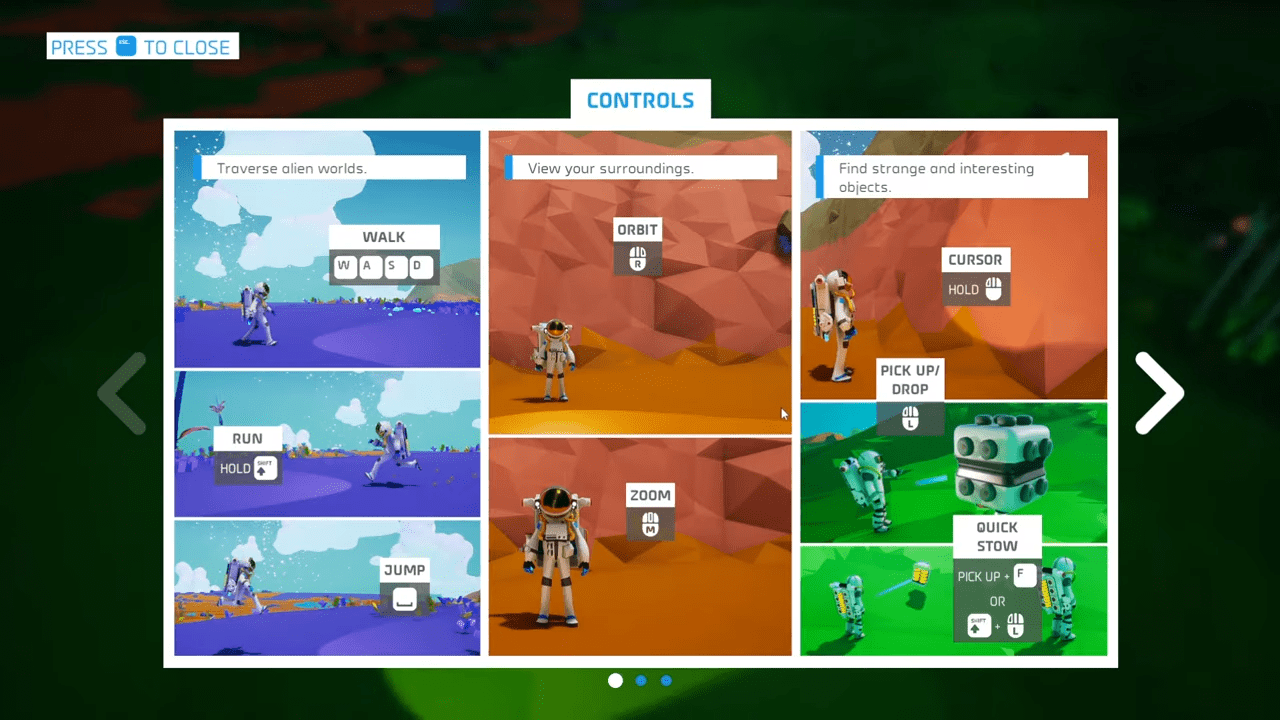
- Sandbox & Terraforming: Sculpt planets with the Terrain Tool to dig, build, and gather resources
- Craft & Build: Unlock technology via research bytes, craft tools, vehicles, bases, and modular factories
- Exploration & Progression: Activate Gateway Chambers on seven planets, collect Triptychs to reach the endgame
- Oxygen Mechanics: Use tethers and oxygenators to survive longer expeditions without suffocating
- Multiplayer Co‑op: Drop‑in/drop‑out online play for up to four players; teamwork speeds delivery and exploration
- Art & Audio: Distinctive low‑poly visuals and ambient soundtrack create a serene, stress‑free atmosphere
- Updates & DLC: Continual free updates plus the Glitchwalkers expansion (2024) add new planets, tech, and story content
- Reception & Limits: Lauded for creativity, base-building, and co‑op; critics cited limited scope, occasional bugs, and low narrative depth
Astroneer delivers a soothing, open-ended space sandbox, ideal for players who enjoy creative exploration and building with friends, rather than traditional combat or narrative-driven gameplay.
2. Getting Started: Oxygen, Tethers & Scanning
Your first priority in Astroneer is to secure oxygen and power so you can venture beyond your Starter Shelter. Craft tethers to extend your oxygen supply by 20 m each and never explore without at least a dozen. Unlock and place a Small Generator inside your shelter; it consumes Organic to produce 2 U/s of power for 120. Finally, deploy the Terrain Scanner to tag resource veins on your star map i.e. the fastest way to chart your mining network.
3. Resource Categories & Early Priorities
Materials fall into four processing tiers. Building modular cells around each tier guarantees a scalable base from day one.
| Category | Examples | Processing Module |
|---|---|---|
| Natural | Organic, Resin, Clay, Quartz, Laterite, Hematite | Backpack / Auto Extractor |
| Atmospheric | Hydrogen, Nitrogen, Argon, Methane | Atmospheric Condenser |
| Refined | Aluminum, Iron, Glass, Ceramic | Smelter / Soil Centrifuge |
| Composite | Plastic, Rubber, Steel, Nanocarbon Alloy | Chemistry Lab |
Early-game focus: Organic (fuel & tethers), Resin (medium storage), Laterite (aluminum platforms) to quickly unlock Medium Printer and Smelter.
4. Locating & Harvesting Deposits
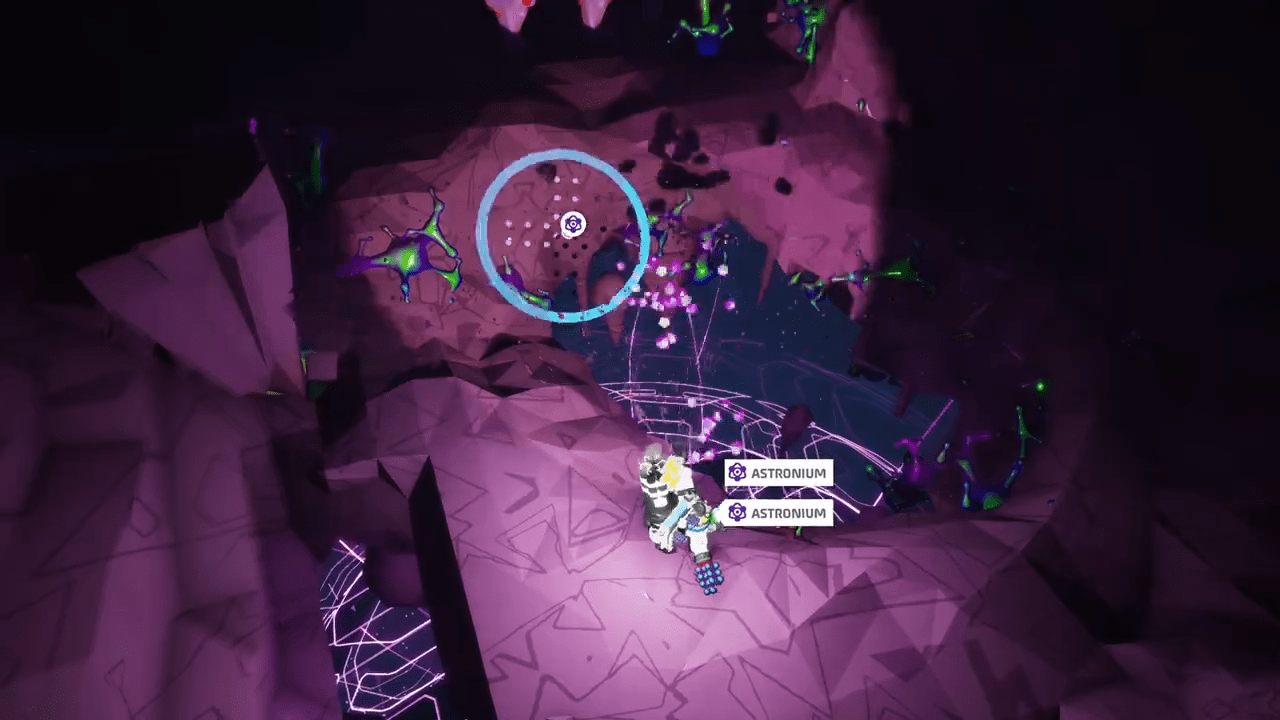
Resource veins glow as colored streaks in the terrain. Hand-dig with your Terrain Tool or attach an Auto Extractor for 15× yield, dumping nuggets into adjacent storage or belts automatically.
Atmospheric gases require an Atmospheric Condenser, so canisters collect Hydrogen, Nitrogen, Argon, or Methane for lab use.
5. Refining Raw Materials
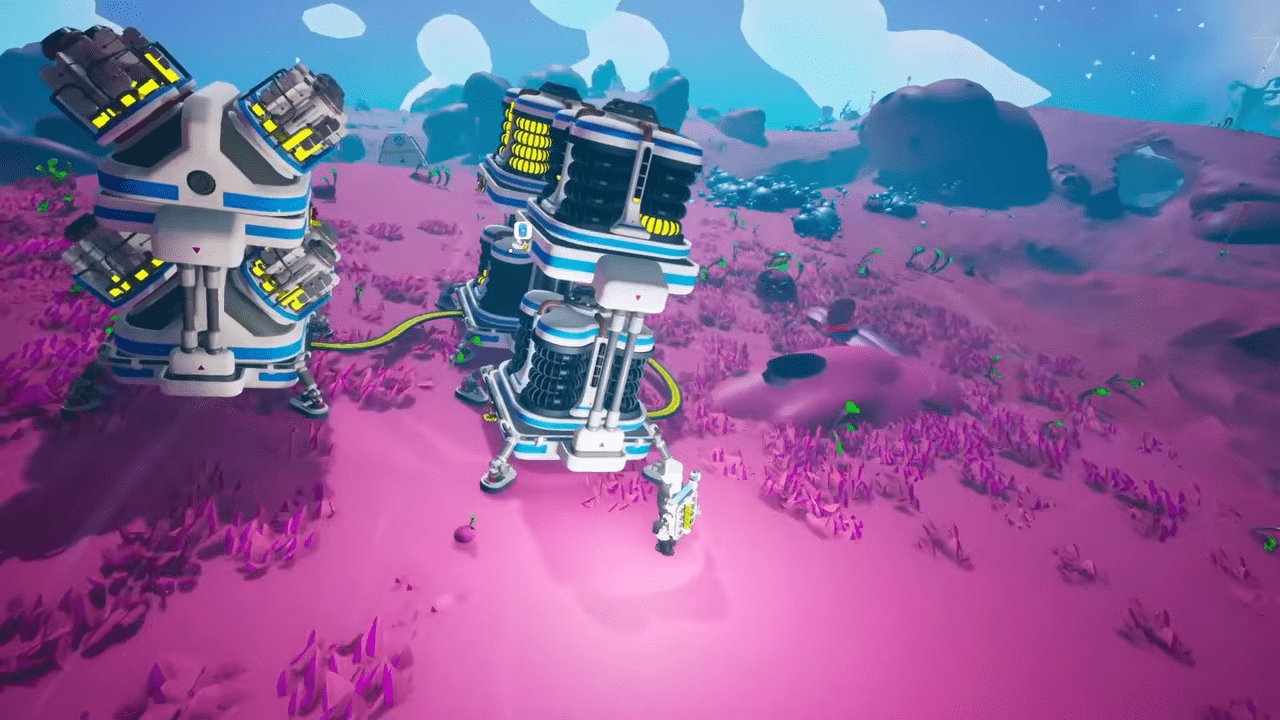
Smelters and Soil Centrifuges transform raw nuggets into refined ingots and ceramics. Each smelter handles one material at a time; throughput scales with power input.
| Raw Nugget | Refined Output | Main Uses |
|---|---|---|
| Laterite | Aluminum | Platforms, Solar Panels |
| Hematite | Iron | Tools, Modules |
| Quartz / Silica | Glass | Domes, Batteries |
| Clay | Ceramic | Soil Centrifuge feed, Circuits |
| Organic | Carbon | Composite feedstock |
Soil Centrifuges turn soil into Ceramic at no power cost, ideal for clay-heavy research outposts.
6. Composite Materials & Chemistry Lab Chains
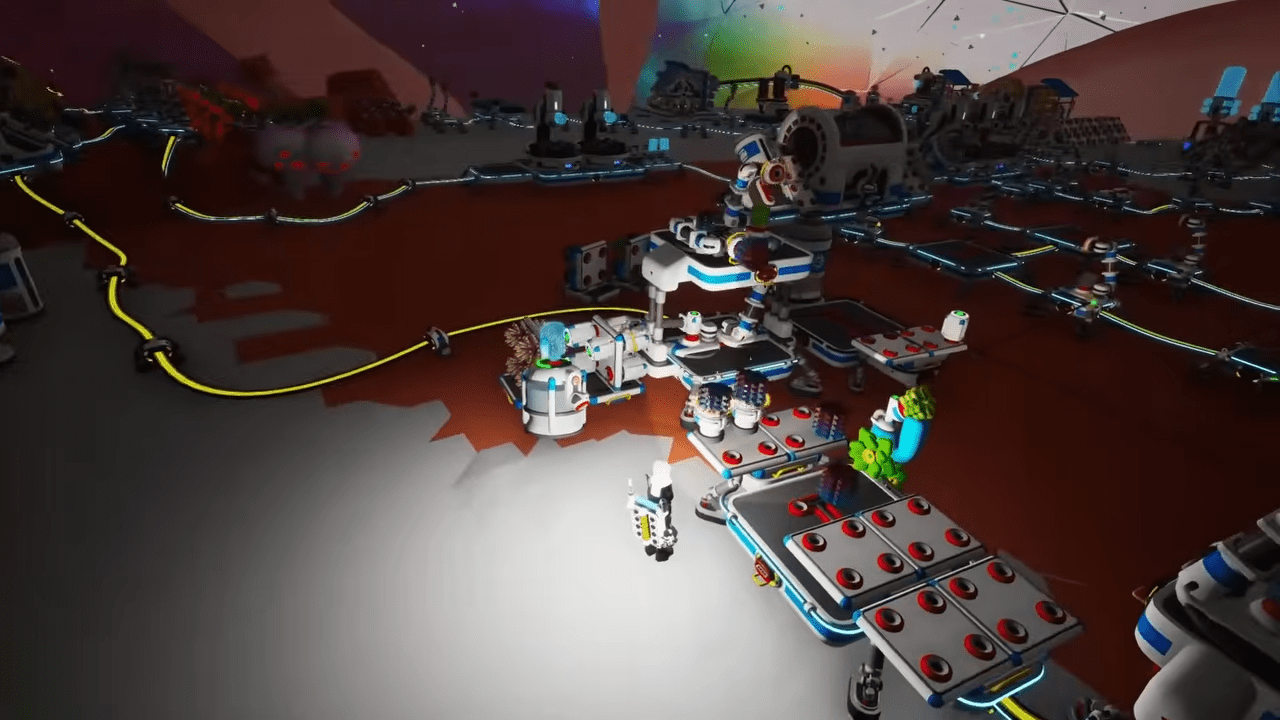
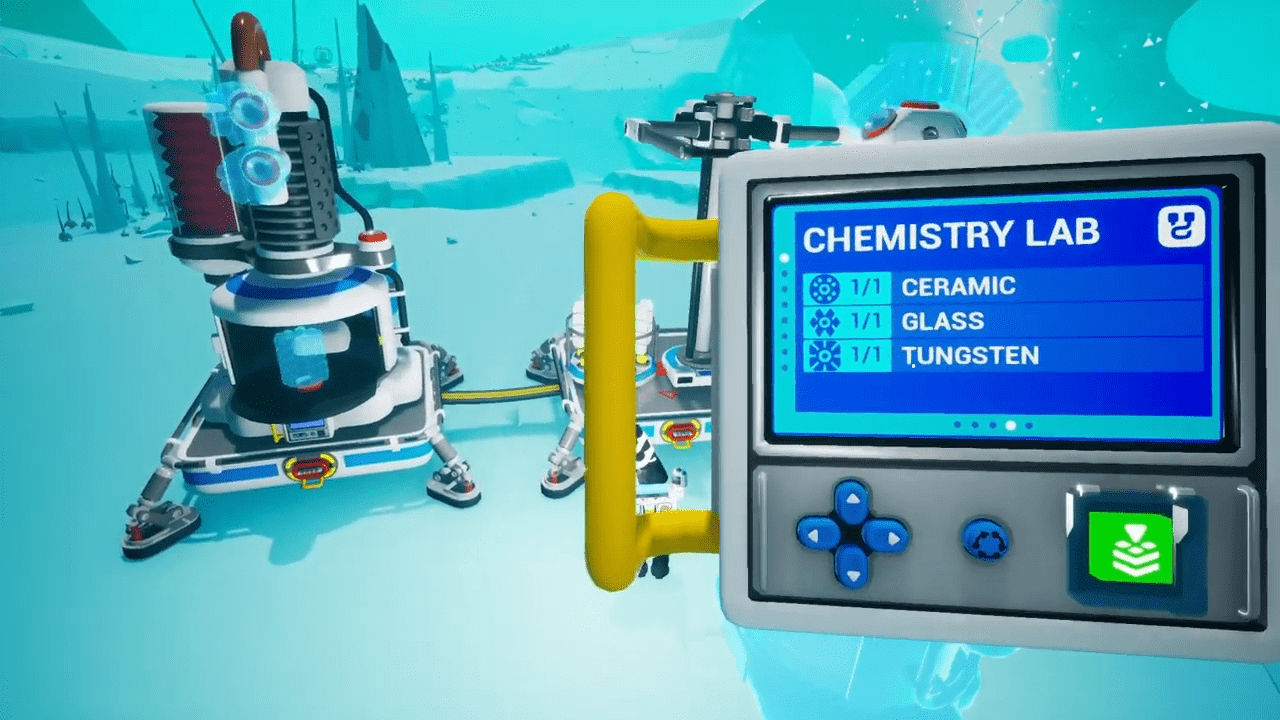
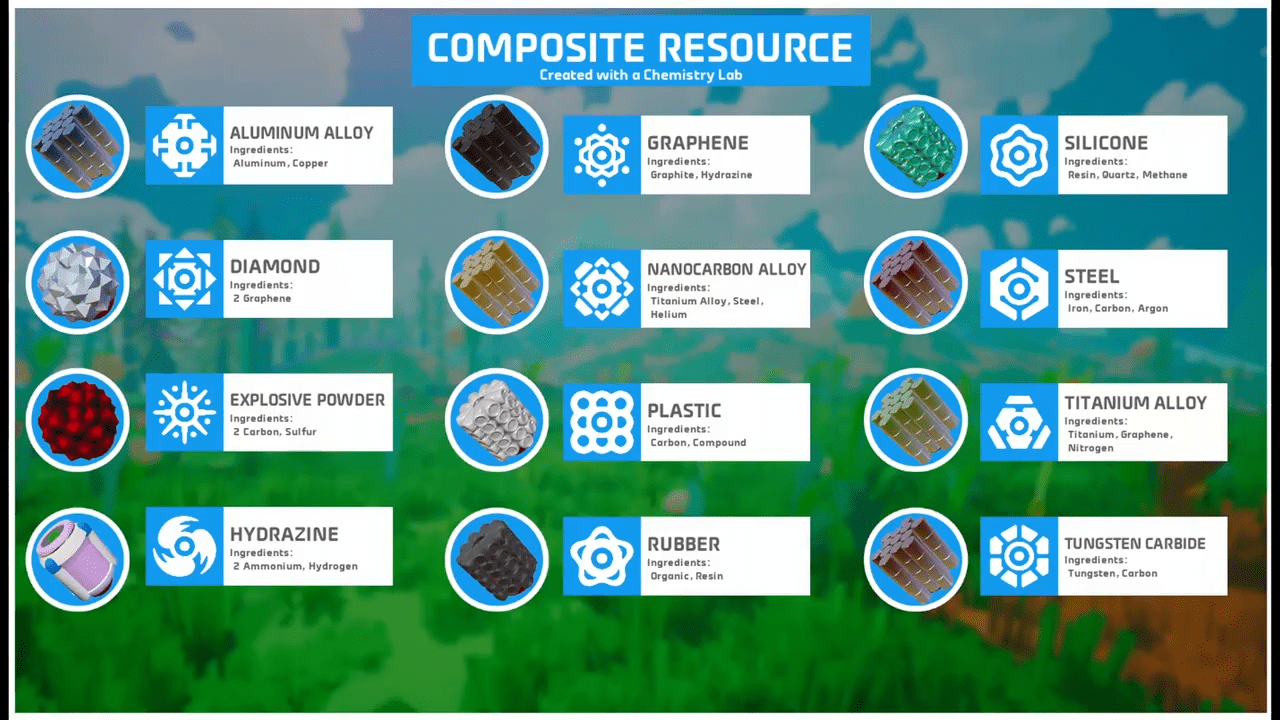
These composite resources are synthesized in the Chemistry Lab by combining solids, and often gases, in 30 s cycles at 10 U/s each.
| Composite | Inputs | Uses |
|---|---|---|
| Plastic | Carbon + Compound | Batteries, Electronics |
| Rubber | Hydrogen + Resin | Medium Storage, Wheels |
| Steel | Iron + Carbon + Argon | Hydrazine farms, Research |
| Nanocarbon Alloy | Titanium Alloy + Steel + Helium | High-Efficiency RTGs, Quantum Gates |
7. Power Management & Base Layout
A robust power grid underpins every automated cell. Start with Small Generators, then add Solar Panels, Wind Turbines, and endgame RTGs for steady output.
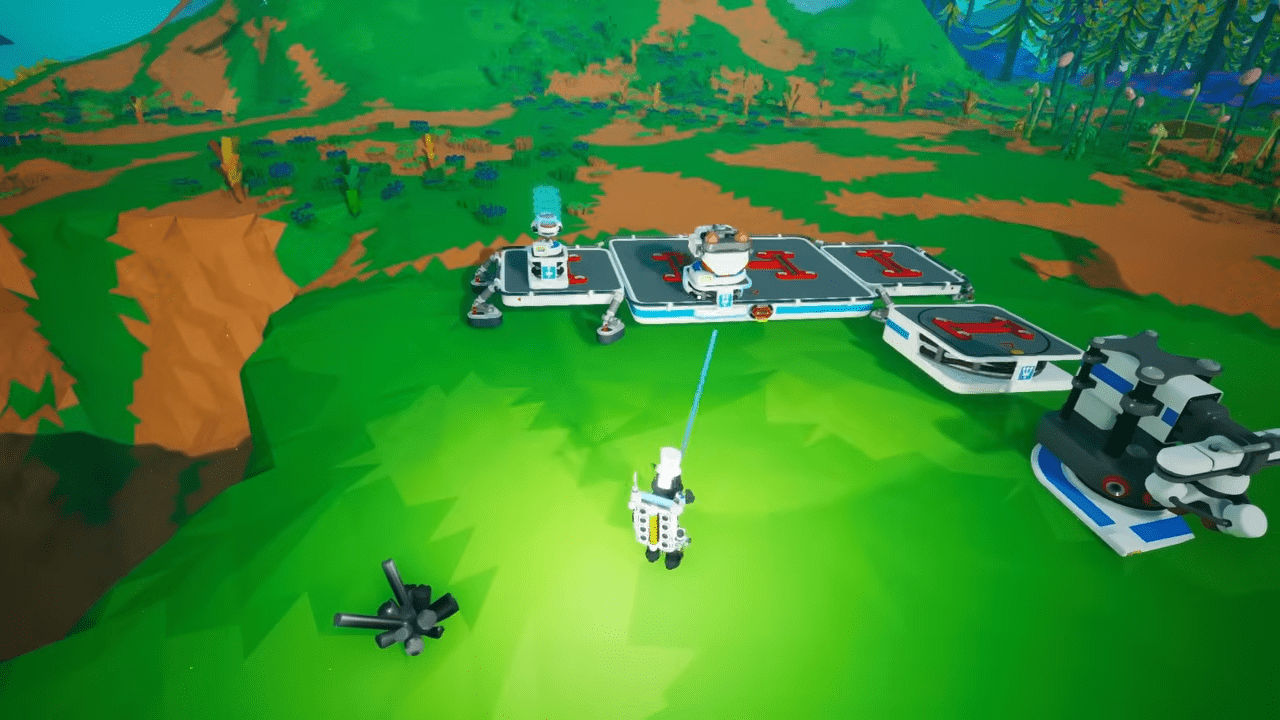
Cluster Smelters, Labs, and Centrifuges in fours, each ringed by power poles because this minimizes cable sprawl and voltage drop, and lets your layout mirror your resource chains.
8. Case Study: Automating Nanocarbon Alloy
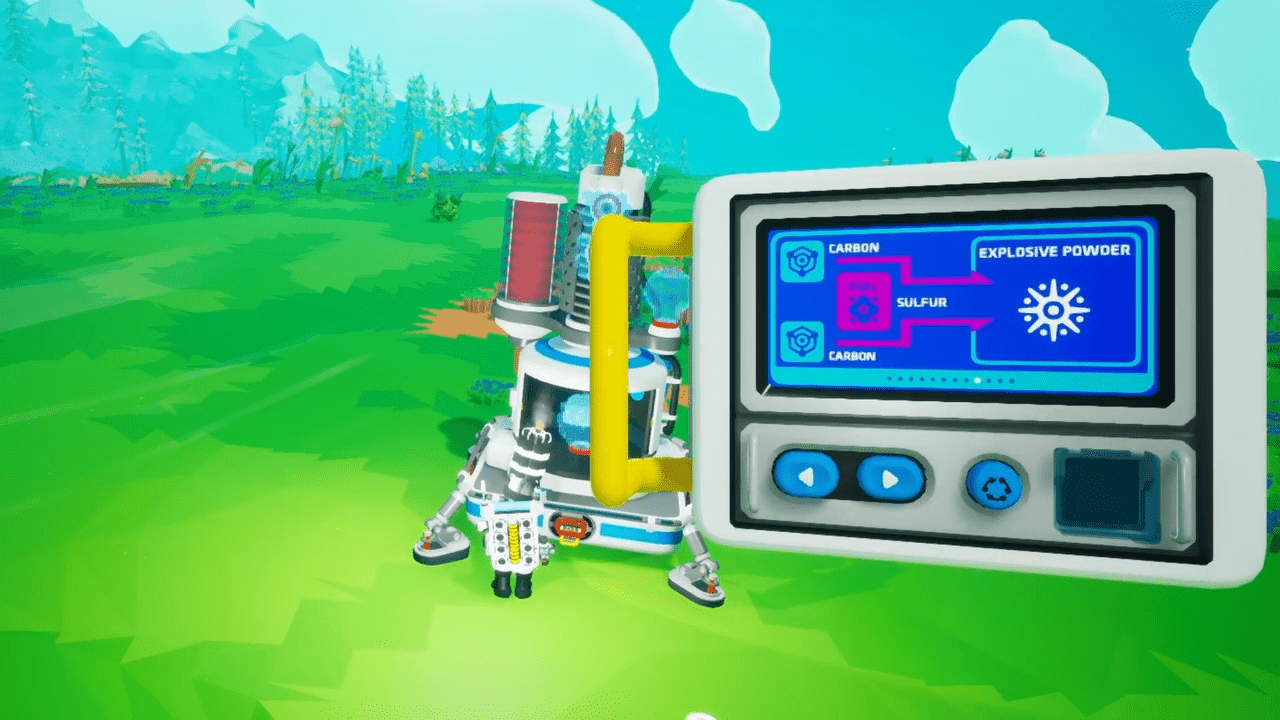
Automate Nanocarbon Alloy i.e. the backbone of advanced RTGs in four key steps:
- Smelt Laterite & Sphalerite into Aluminum & Titanium Alloy in parallel Smelters.
- Produce Iron & Carbon from Hematite & Organic; synthesize Steel with Argon.
- Feed Titanium Alloy, Steel, and Helium into a dedicated Chemistry Lab for continuous output.
- Buffer alloys in Medium Storage before routing to RTG assembly cells.
Use Smart Splitters on Helium lines to serve multiple labs with a single Medium Belt.
9. Best Practices & Optimization Tips
- Always tag new deposits because unscanned nodes reject belts and extractors.
- Copy-paste identical cell layouts across planets for consistent scaling.
- Route rare gases through Smart Splitters to prioritize critical labs.
- Label power poles and storages with signs for rapid troubleshooting.
- Keep a battery+generator emergency kit near your Starter Shelter.
9. Conclusion & Next Steps
You’ve now mapped every step from your first tether to a seamless Nanocarbon Alloy loop. So, by following modular cells, buffering power, and tagging every node, your bases will hum with efficiency. Now, return to Sylva or Vesania, tag your nearest Laterite and Hematite veins, and set up a 4-cell Smelter cluster today!

Leave a Reply