

Last Updated on 15 December, 2025
Welcome, fellow café owners! If you have ever dreamed of running a high-end restaurant where the farming is cozy and the profits are massive, you have found your new home in Not Monday Cafe. After sinking an incredible 150+ hours into this gem, I have unlocked the secrets to turning a humble eatery into a multi-million dollar empire.
In this extensive guide, I will walk you through everything I have learned. We will cover how to optimize your farm workflow, design a kitchen that runs like a machine, curate a menu that maximizes profit, and build a breathtaking garden terrace. Whether you are struggling to break even or chasing that elusive 5-star rating, this guide has the answers.
Table of Contents
Mastering the Farm: Crops, Animals, and Workflow
The foundation of your culinary empire begins in the dirt. Without a steady supply of ingredients, your kitchen stops running. However, you do not need to cover every square inch of land with crops to succeed. Smart farming beats hard farming every time.
The Basics of Growth
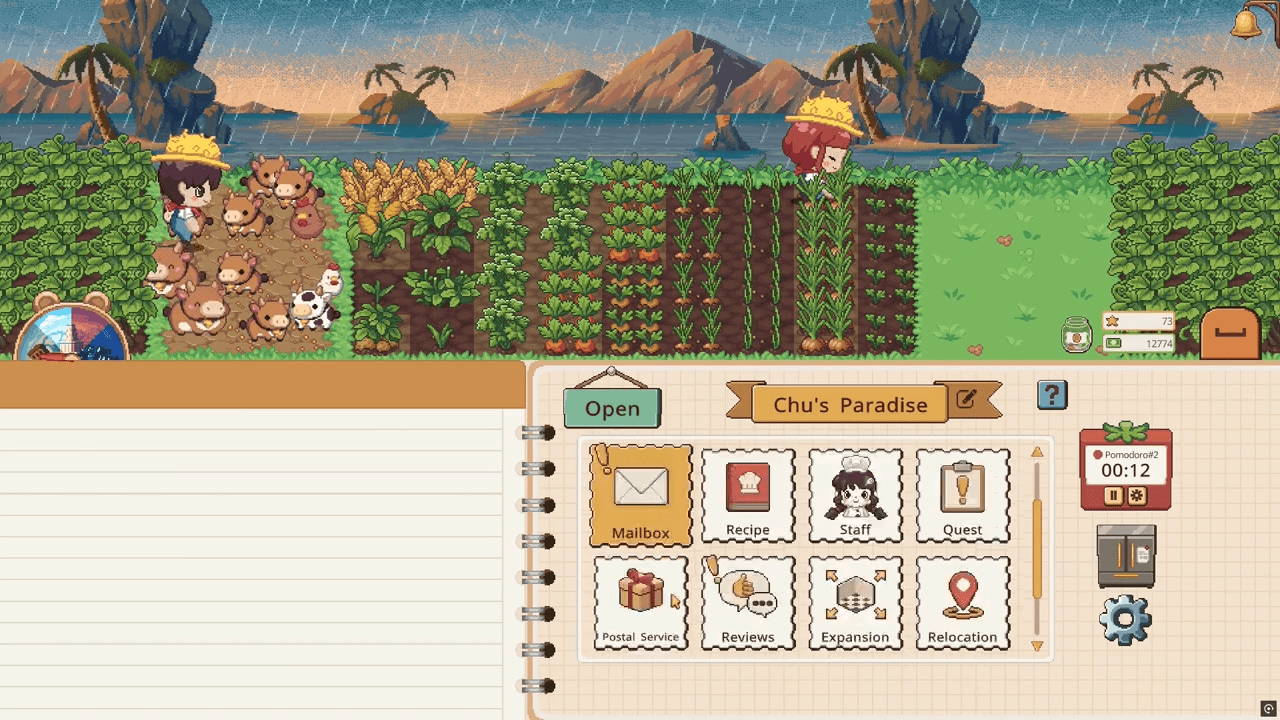
Understanding the passage of time is crucial. In Not Monday Cafe, 10 real-time minutes equal one in-game day. When it rains, the weather event usually lasts for at least a full day. Since most crops take between 1 to 3 minutes to grow, a single rainy day allows you to harvest the same crop at least three times. This is your window for maximum productivity.
Remember these core mechanics:
- Double-Clicking: You can double-click a crop to harvest and water it simultaneously. This also works for harvesting animal products and feeding them in one go.
- Requirements: Plants strictly require water to grow, and animals require food to mature.
Optimizing Your Farm Hands
You will eventually hire kids to help with farm chores. However, they follow a strict priority logic. It is vital you understand this hierarchy to stop them from wasting time. The priority order for farm workers is:
- Taking care of and harvesting animals (highest priority)
- Watering crops
- Harvesting crops
Because they prioritize animals, you should keep your animal pens clustered together. If you place animals far apart, the kids spend all their time running between them and ignore your crops. Furthermore, if you have crops that require high-volume harvesting, place those fields near the animal area. This minimizes the walking distance for your workers.
Handling Moles and Pearl Oysters
There are two special assets that farmhands will not touch: Moles and Pearl Oysters. You must manage these manually.
- Moles: These are essential for the late game because they produce Diamonds (albeit with a less than 1% drop rate).
- Pearl Oysters: These are strictly for generating stars via pearls. You use stars to buy exclusive furniture.
Since you must harvest these yourself, do not place them at the edge of the map. I recommend placing them right next to the kitchen. This allows you to check your chefs and harvest your pearls in a single glance.
Kitchen Optimization: Equipment and Staffing
The kitchen is the engine of your restaurant. If the engine stalls, your customers leave unhappy. My experience shows that the most critical factor in the kitchen is staffing, followed closely by equipment upgrades.
The Staffing Rule
If a complex dish requires four ingredients, four different little chefs will each carry one ingredient to the station. If you lack staff, that dish takes forever to prep.
Equipment Strategy: Orange vs. Blue
When you open the Upgrade Kitchen page, you will see two background colors for equipment.
- Orange Background: These machines produce final dishes. Upgrading them unlocks premium recipes and higher prices.
- Blue Background: These are processors (like the Mill). They do not create finished dishes, but they are essential steps in the cooking process.
You should prioritize upgrading the Beverage & Frozen Station, Bingsu Machine, Ice Cream Churner, and Coffee Maker. Why? Because approximately 40% of your customers will order drinks, juices, or frozen items. Neglecting these stations will bottleneck nearly half your orders.
The Layout Logic
In a small kitchen, the refrigerator is your sun, and everything else should orbit around it. Place the fridge in the center, directly next to the Food Delivery Station.
Check the left side of your Recipe page to see which equipment gets the most use. In my 30-dish menu, the Oven was used for 12 recipes. Consequently, I bought multiple Ovens.
- High-Use Items (Ovens, Mills): Place these directly facing or next to the fridge.
- Mid-Use Items: Buy two units. Place one near the fridge and one slightly further away.
The goal is simple: reduce walking time. If chefs can complete a cooking cycle without taking more than a few steps, you maximize your throughput.
The Art of the Menu: Pricing and Profit Strategy
Many new players make the mistake of trying to sell everything. Once you unlock all recipes, there are 332 dishes available. Do not sell them all. Doing so averages out your earnings and suppresses your income.
The Selection Process
You want to curate a High-End menu. I currently have 125 dishes unlocked, but I only sell the top 50.
- Food: I select the 30 most expensive dishes.
- Drinks/Frozen: I select the 20 most expensive items.
Whenever I unlock a new recipe that is more expensive than my cheapest item, I swap them immediately. This ensures my menu constantly evolves toward higher premiums.
The One Dish Endgame
For the ultimate maximize-profit strategy, you can go even further. The absolute best way to make money is to sell only your single most expensive item.
- Find an item worth at least $1,000.
- Remove all other items from the menu.
- Upgrade that specific item to level 10.
- Once you unlock a dish worth $2,000, switch to that and repeat the process.
This simplifies your farm because you only need to grow ingredients for that one specific dish. You can strip your kitchen of unnecessary equipment and focus entirely on efficiency.
Calculating Upgrade ROI
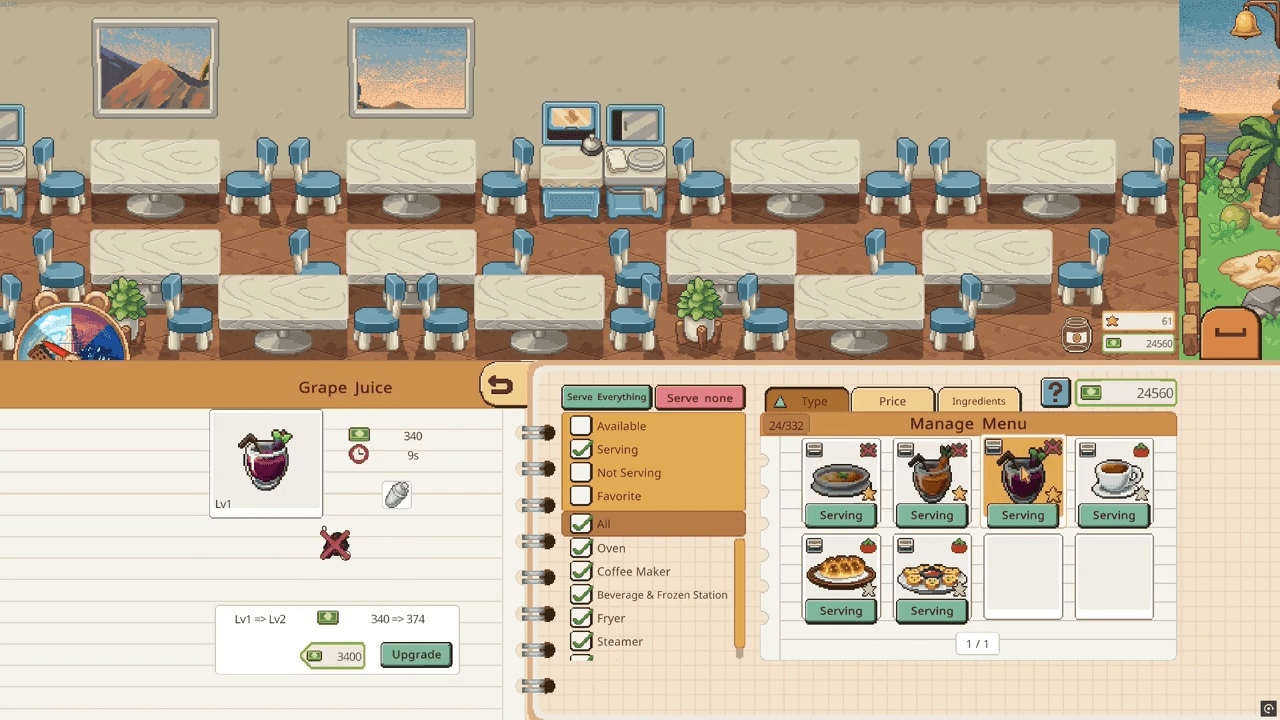
Upgrading recipes becomes very expensive. You need to know when it is worth the investment. I generally wait until I have a dish worth $1,000 at Level 1 before I start dumping money into upgrades.
Use this table to guide your investment decisions. This helps you calculate how many dishes you need to sell to break even on the upgrade cost:
| Level | Sales Needed to Break Even |
|---|---|
| 2 | 100 Dishes |
| 10 | 500 Dishes |
| 20 | 1000 Dishes |
| 30 | 1500 Dishes |
If you sell 20 dishes a day, upgrading to level 20 means it takes 50 in-game days just to earn back your investment. Plan accordingly!
Cafe Management: Layout and Efficiency
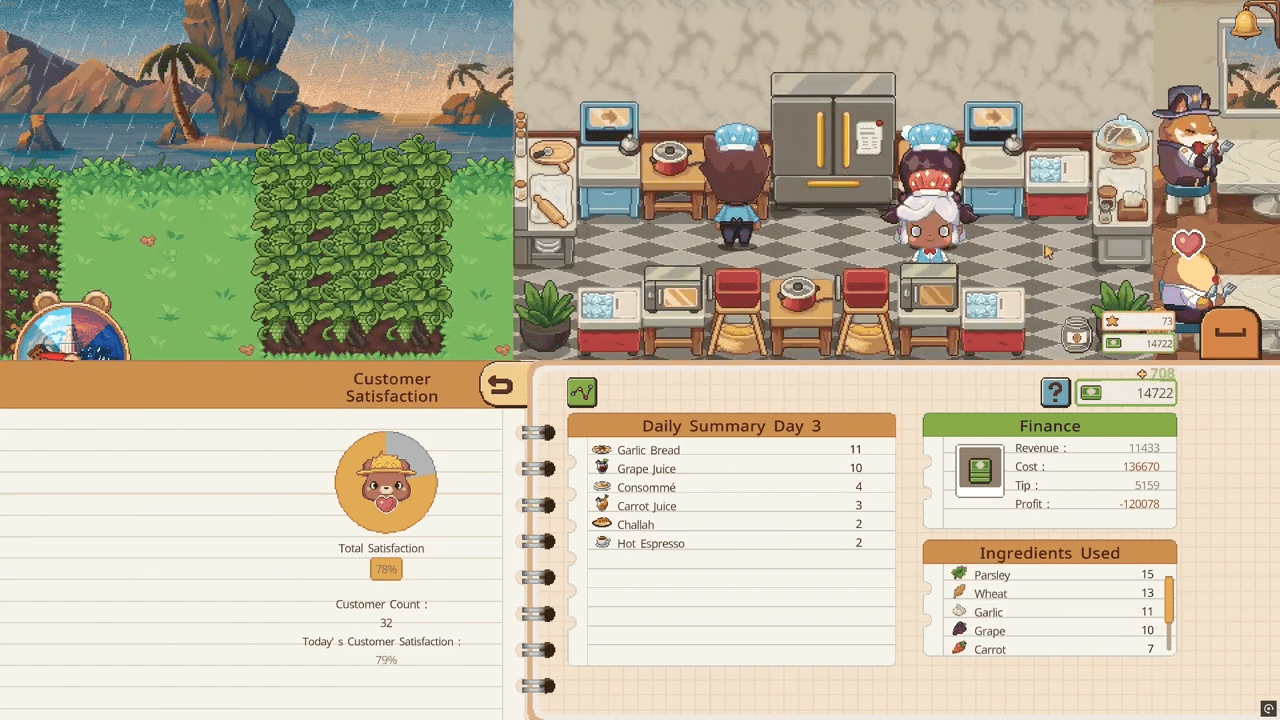
Managing the floor is just as important as managing the farm.
Expansion and Customer Growth
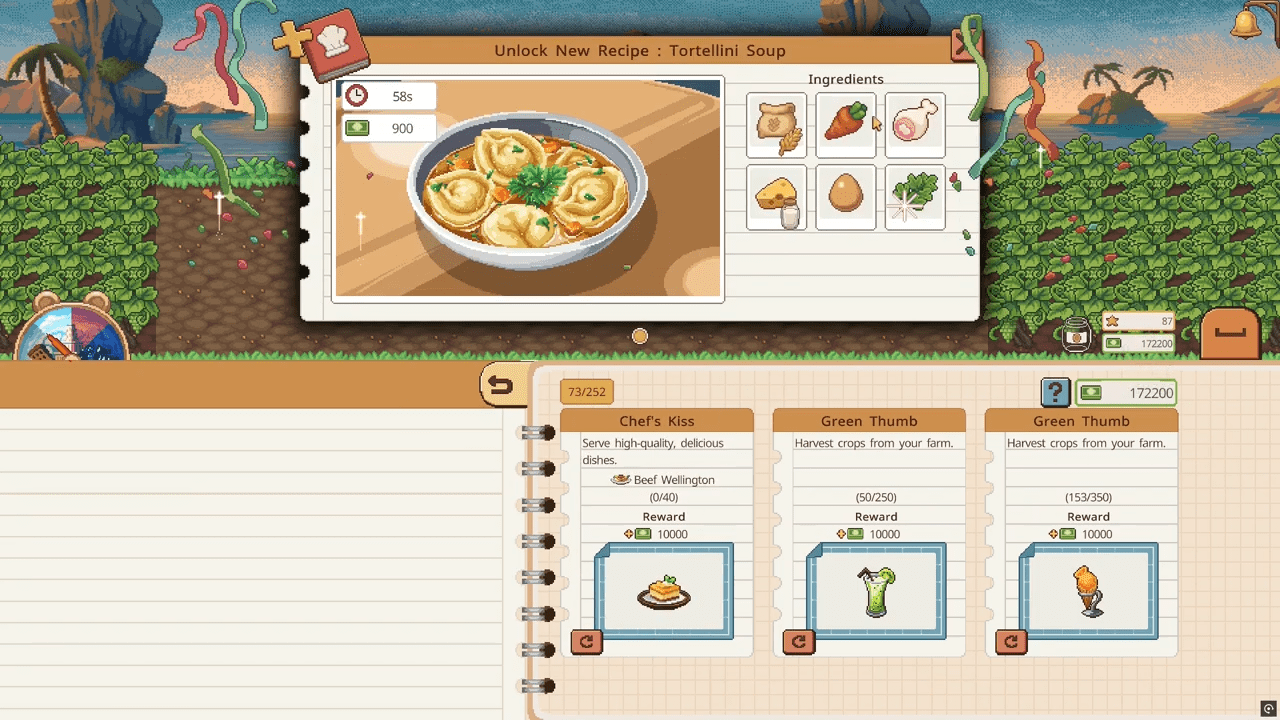
You might worry that raising prices will drive customers away. While customer count might drop slightly, your revenue will skyrocket. When you have saved enough cash, expand your restaurant size.
Monitor your growth to ensure it is proportional. If you go from 10 tables to 16 tables, your customer count should rise from roughly 36 to 57 per day. If you hit that number, your expansion was a success.
The Teleport Layout Trick
Here is a secret: customers in Not Monday Cafe can teleport. They do not need walking paths between tables. You can place tables and chairs right up against each other to maximize density. Customers will simply phase through other guests to reach their seats. Go wild with your layout and pack the dining room as tightly as possible. More tables equal more sales.
Frustrations to Watch For
Be aware of the Seat Hog. Sometimes a single customer will sit at a table meant for four. Currently, there is no way to ask them to move, which blocks three other potential paying customers. It is frustrating, but it is just part of the game!
Achieving the Perfect 5-Star Rating
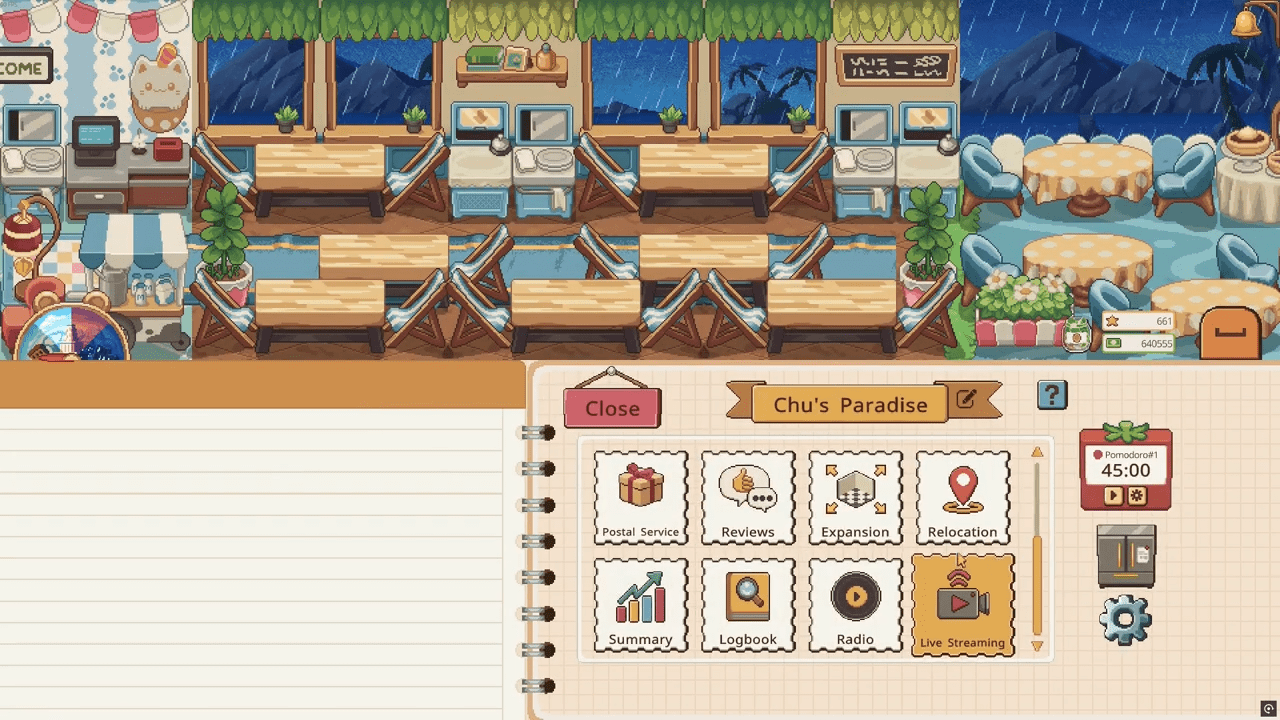
Getting that 5-star rating comes down to two variables: Speed and Value.
1. Speed (The Staffing Check)
As mentioned in the kitchen section, get dishes out fast. If your staff is overwhelmed, your rating drops. Ensure you have enough idle staff to handle bursts of orders instantly. Upgrade your kitchen tools to shave precious seconds off prep time.
2. Value (The Decor Density)
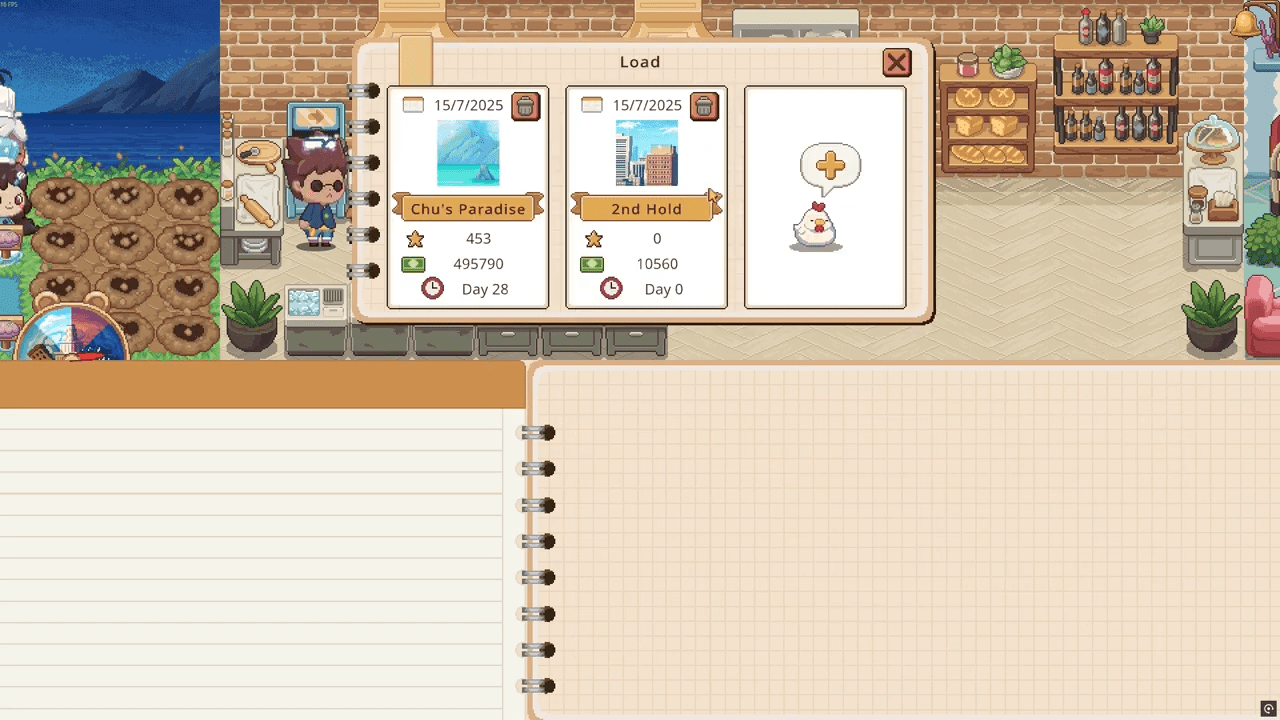
To get an expensive dining room, the main idea is to pack as much expensive stuff in as possible per square. If you expand, you need to buy more stuff to fill it. Get the most expensive chairs, tables, flooring, and walls you can afford.
- Buy the most expensive flooring, walls, chairs, and tables you can afford.
- The Bonsai Strategy: Fill every empty space with small, high-value items. Bonsai plants are the most effective tool here. They cost $20k but only take up a 1×1 square. They skyrocket your restaurant’s value without cluttering the visual space too much.
Design Corner: Building the Outdoor Garden Terrace
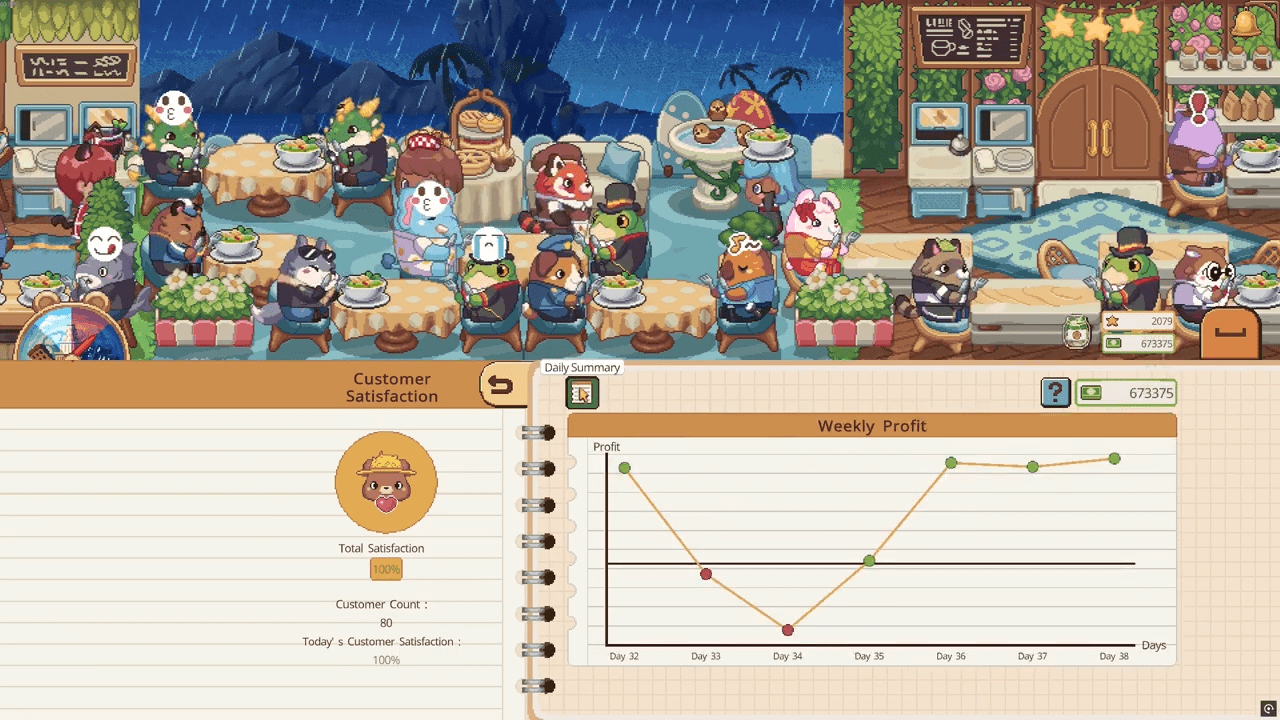
Now for the fun part! The game features a surprisingly deep decorating system that allows you to build a stunning outdoor garden terrace. This is one of the features that delighted me the most.
How to Build It:
- Click Renovation and then Wallpaper.
- Scroll down and you will see several types of low fences.
- Pick one you like and place it on a wall. You will notice the wall becomes transparent and shows the background scenery instead.
- Add a few more fences, and your garden terrace will start to take shape.
- Next, go to Dining Room and then Walls. Look for wisteria flowers (they come in different colors) that can be placed on walls.
- Stick them on the walls of your garden terrace. Just like that, you will have a beautiful terrace filled with lovely wisteria flowers!
You can also add all sorts of furniture to decorate your new space. There are string lights, maple leaf strings, and other leaf strings available in the game that look great when used to decorate a garden terrace. Note that as the game level increases, these decorative items will gradually become available.
Conclusion
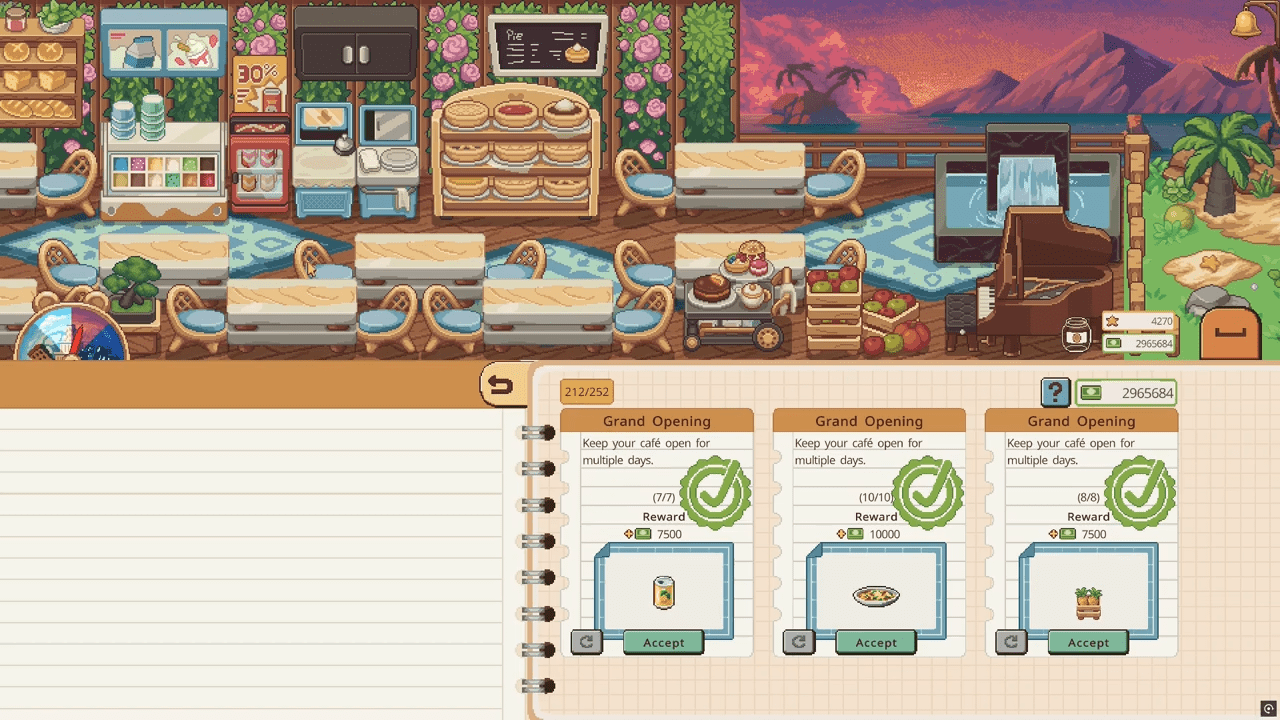
I can confidently say that Not Monday Cafe rewards strategy just as much as creativity. By specializing your menu, optimizing your staff workflow, and utilizing the teleporting seating arrangements, you will find saving up for that next expansion super easy. The game is a joy to play, and with these tips, you are well on your way to building the restaurant of your dreams. Happy cooking!

Leave a Reply