

Last Updated on 20 November, 2026
Gene Modding in Probably Stolen lets you strip weak innate stats, stack yield bonuses, and transplant chemical traits across crop species. Starting too early drains your cash and power grid because the system demands thousands of credits, spare seeds, and repeated grow cycles.
This guide organizes the full system around player workflow: unlock prerequisites, the exact Complexity and Heat formulas, target builds by profit or utility goal, all 26 plant traits, and module plus Turbo Booster priorities.
Table of Contents
Pre-Flight Checklist and How to Unlock Gene Modding
Engineered seeds pay off through scale. Once you finish a high-output seed line, you can propagate and run it across every Hydroponic System you own without buying duplicate bay modules for each machine.
Confirm four prerequisites before starting:
- Multiple Hydroponic Systems: Each bay draws 8 power per night. Running one machine will not recover your early credit burn fast enough.
- Power headroom: Reserve at least 12 power per night for the DNA Manipulator, plus extra charge if you run Turbo Boosters.
- Disposable seed stock: Early extractions destroy donor seeds until you install a Genetic Stabilizer Module.
- Upgrade currency and cash: Budget 1,600 Wild’s Favor for the unlock route, plus thousands of credits for disks and modules.
How to Unlock the DNA Manipulator
- Call Joe Wild’s Assistant on
8376and select Browse Wild’s Service. - Open the HYDROPONIC FARMER section under the BASIC tab.
- Purchase Retired Farmer first. He visits the next day and returns weekly to sell seeds and hydroponic supplies.
- Purchase Plant Genetics (base cost 1,250, bringing the full route to 1,600 Wild’s Favor).
Buying Plant Genetics delivers your starter kit right away: a DNA Manipulator (legal item, 12 power/night, 10 Progress Speed/day, 20 base work or 2 nights on an unmodified seed), a toggleable Gene Scanner, and blank DNA Data Disks.
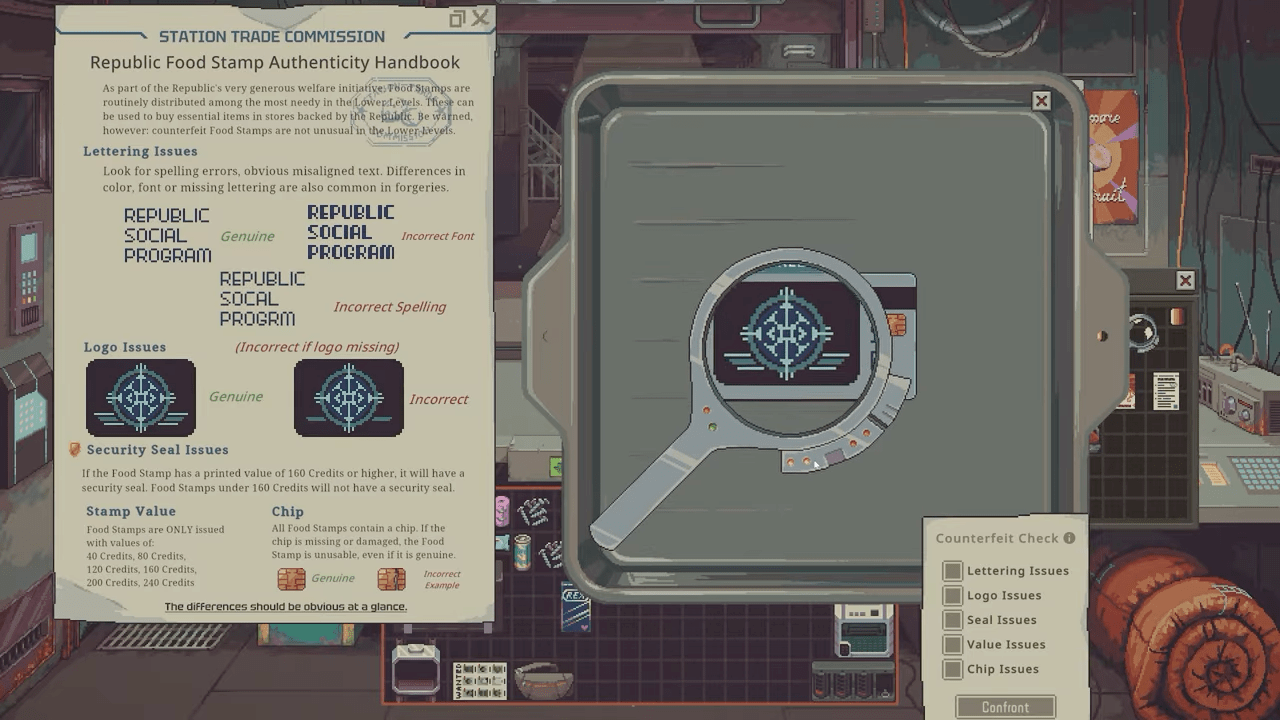
Tip: Switch on your Gene Scanner before touching any seed. It exposes base Complexity, current Genetic Heat, and innate trait ranks so you do not waste disks on low-odds edits. You can also toggle the DNA Manipulator to turn disk auto ejection on or off.
The Core Seed-Engineering Loop
Every custom crop follows the same five-part cycle: capture traits onto disks, refill those disks instead of burning blanks, offset Complexity with harmless negatives, grow out Genetic Heat, and cap the seed with Perennial last.
Step 1: Extract and Refill DNA Data Disks
The DNA Manipulator uses three core slots: Trait Disk (install), Target (seed), and Blank Disk (extract or refill).
- Insert a blank disk in Blank Disk, a donor seed in Target, and a charged Energy Cell to copy one random trait. Without a Genetic Stabilizer, the donor seed is destroyed.
- Check your new disk’s charges. Extracting an innate trait grants uses equal to the donor’s rank in that trait, while extracting a non-innate trait grants 1 use.
- Insert a written disk in Trait Disk and your recipient seed in Target to add the trait or raise its rank by 1. Each install consumes 1 use, and spending the final charge destroys the disk permanently (the counter disappears at 1 use left).
- Refill rare disks before they run dry. Slot an existing written disk into Blank Disk with a donor carrying that trait to force a targeted extraction and add charges to that same disk.
Data Disks carry a base value of 140 Credits (loaded disks show 210 Credits in shops) and use five color codes: Black (Blank), Green (Positive), Red (Negative), Purple (Production), and Blue (Transformative).
Step 2: Calculate Effective Complexity and Genetic Heat
Success odds and job length depend on a seed’s Effective Complexity, which equals its current genetic complexity plus its temporary Genetic Heat.
- Base genome modifiers: Most crops start at 0 Complexity. Uneditable traits Simple Genome (-4 per rank) and Complex Genome (+4 per rank) shift that baseline, putting Fillerweed at -8 (Simple Genome II) and Nutrifruit at +8 (Complex Genome II).
- Success rate baseline: At 0 Effective Complexity with no Quality modules, success sits at 95%. Negative Effective Complexity can reach 100% without Quality modules, while high positive Complexity cuts odds down toward a 5% floor and stretches jobs to 4 or 5 nights.
- Complexity shifts: Positive traits add +2 to +5 Complexity per rank, and removing any innate trait also increases Complexity. Negative traits subtract -1 to -3 per rank.
- Genetic Heat formula: Every edit adds
2 + |trait complexity|in Heat, even when the attempt fails. Editing a +4 trait like Bountiful adds 6 Heat per attempt, and Perennial (+5) adds 7 Heat. - Diminishing returns on rank: Edible and Perennial cap at Rank 1. All other stackable traits scale by
rank^0.75, so Rank 2 delivers roughly 1.68x the Rank 1 bonus (for example, Bountiful rises from +20% at Rank I to +34% at Rank II).
Step 3: Clear Heat and Pick a Pacing Strategy
Planting an edited seed in a Hydroponic System and harvesting fresh seeds resets Heat to 0 while keeping every trait change. Choose one of two workflows to reach your target build:
- Profit-as-you-go loop: Alternate one negative trait and one positive trait, growing a fresh generation between edits. Your bays stay profitable while you build the seed line.
- Negative-Complexity rush: Stack harmless negative traits first to push base Complexity deep below zero. With a large negative buffer, you can chain multiple positive edits back-to-back without Heat pushing Effective Complexity above 0.
Tip: Never let your DNA Manipulator sit idle during Heat-clearing grow cycles. Use those overnight windows to refill your active Data Disks through the Blank Disk slot.
Best Gene Modding Builds by Goal
A strong custom seed pairs high-impact positive traits with negative traits whose penalties do not touch your water supply, processing method, or sale channel.
1. Legal Cash Crop: Meal Cap Factory
Start with Dream Cap Spores and install four Dream Cap Neutralizer Hydroponic Modules in your Hydroponic System. Each module adds +2 Dream Cap per harvest, boosts Performance and Efficiency by +15%, and converts the entire contraband harvest into legal edible Meal Caps.
- Positive priorities: Stack Bountiful and Fast Grower, then cap the finished seed with Perennial.
- Free Complexity sinks: Stack Weak (active drug potency does not matter for food) and Nutrient-Poor (calories do not affect Meal Cap sale value).
- Verified endgame output: A tuned build yields 18 Large Meal Caps per day at a base value of 27 Credits each, generating 486 Credits per day per bay.
2. Chemistry and High-Risk Contraband Pipelines
Use Fillerweed as your chassis when farming chemistry inputs. Its innate Simple Genome II (-8 Complexity) and immunity to contaminant penalties let you graft Caffeine Production (+3) or Dream Cap Mush Production (+4) alongside Potent (+3, extracted from Coffee).
- Free Complexity sinks: Stack Thirsty (Fillerweed grows fine in cheap Rustwater), Unappetizing (sale price penalties do not matter when processing harvests into chemicals), and Nutrient-Poor.
- Contraband warning: Dream Cap Mush Production adds 2 ml of Dream Cap Mush to every harvested item, flagging all output as contraband. This contraband status raises sale value but carries over even onto processed goods like Kotton fiber, which can spike your Security record fast.
3. Water Purification and Utility Farms (Hydroreed and Kotton)
Hydroreed produces no food, takes zero contaminant damage, and strips about 28% of every water contaminant per night (one three-night cycle turns Basewater into High-Quality Water). Pair it with Hydroreed Filter Hydroponic Modules (-15% Efficiency each, producing one filter per module per harvest) and stack Dense (+25% durability at Rank I, raising filter durability from 250 innate to 284 at Rank II) or Purifying.
For Kotton (paired with the Loom/Fabric module to output Kotton Fabric at 65 Credits each), you already need Pure Water to protect Growth Score. That turns Frail (-2 Complexity, +30% contaminant sensitivity) into a free Complexity discount alongside Unappetizing and Nutrient-Poor.
4. Huge Nutrifruit Without Grinding Away Infertile
Nutrifruit is the only crop that scales into Huge size for higher sale prices, and size depends on calories. Avoid Nutrient-Poor here, stack Nutritious and Delicious instead, and strip penalties with a Genetic Stabilizer.
Default Nutrifruit seeds carry heavy innate Infertile (Rank 10), destroying returned seeds and blocking Perennial because the two traits are mutually exclusive. Do not burn weeks stripping 10 ranks manually unless you want a self-imposed challenge. Leak the data drive during Eleanor’s storyline, and starting the next day every new Nutrifruit seed you buy becomes fertile and returns 3 seeds per harvest.

Tip: Save Perennial for your absolute final modification. It turns a crop into a regrowing bush with halved regrowth time after harvest 1, but its +5 Complexity, -25% harvest quantity, -20% growth speed, and -50% seed yield slow down all future seed farming and editing.
Complete Plant Traits and Donor Reference
The game includes 26 plant traits in total: 23 core and genome traits plus 3 chemical production traits. Traits in opposite pairs exclude each other on the same seed, and Perennial cannot coexist with Infertile.
Positive Plant Traits (11)
All 11 positive traits store on Green Data Disks and increase genetic Complexity per rank installed.
| Trait | Complexity | Effect at Rank 1 | Exclusions and Notes |
|---|---|---|---|
| Edible | +2 | Harvest becomes edible (100 kcal) | Max Rank 1. |
| Nutritious | +3 | +25% calories | Exclusive with Nutrient-Poor. Drives Huge Nutrifruit sizing. |
| Fast Grower | +4 | +25% growth speed | Exclusive with Slow Grower. |
| Bountiful | +4 | +20% harvest quantity | Exclusive with Sparse. |
| Delicious | +3 | +15% sale price | Exclusive with Unappetizing. |
| Drought Resistant | +2 | -25% water use | Exclusive with Thirsty. |
| Hardy | +3 | -30% contaminant sensitivity | Exclusive with Frail. |
| Fertile | +2 | +25% seed yield | Exclusive with Infertile. |
| Dense | +3 | +25% harvest durability | Player reports confirm it applies to Hydroreed Filters only. |
| Potent | +3 | +25% active potency | Exclusive with Weak. Extracted from Coffee. |
| Purifying | +3 | Removes water contaminants nightly | Exclusive with Polluting. Practical removal caps near Rank 20. |
Negative, Production, and Special Traits (15)
Use Red negative traits to offset Complexity on high-rank builds, Purple traits to graft chemistry outputs, and Blue transformative traits as final capstones. Innate genome modifiers are locked to each crop species.
| Trait | Category | Complexity | Effect at Rank 1 | Exclusions and Notes |
|---|---|---|---|---|
| Nutrient-Poor | Negative (Red) | -2 | -25% calories | Exclusive with Nutritious. No effect on Coffee. |
| Slow Grower | Negative (Red) | -3 | -25% growth speed | Exclusive with Fast Grower. |
| Sparse | Negative (Red) | -3 | -20% harvest quantity | Exclusive with Bountiful. |
| Unappetizing | Negative (Red) | -2 | -15% sale price | Exclusive with Delicious. Harmless for chemistry inputs. |
| Thirsty | Negative (Red) | -1 | +25% water use | Exclusive with Drought Resistant. Cheap sink on Rustwater crops. |
| Frail | Negative (Red) | -2 | +30% contaminant sensitivity | Exclusive with Hardy. Zero downside in Pure Water. |
| Infertile | Negative (Red) | -1 | -25% seed yield | Exclusive with Fertile and Perennial. |
| Weak | Negative (Red) | -2 | -25% active potency | Exclusive with Potent. Safe sink on Meal Cap builds. |
| Polluting | Negative (Red) | -2 | Turns water into waste nightly | Exclusive with Purifying. |
| Perennial | Transformative (Blue) | +5 | Regrows after harvest (-25% harvest, -20% speed, -50% seeds) | Max Rank 1. Exclusive with Infertile. Regrowth takes half time. |
| Caffeine Production | Production (Purple) | +3 | Adds caffeine output to harvest | Used to graft chemistry output onto fast-growing crops. |
| Coffee Bean Mush Production | Production (Purple) | +2 | Adds Coffee Bean Mush to harvest | Low-Complexity production trait. |
| Dream Cap Mush Production | Production (Purple) | +4 | Adds 2 ml Dream Cap Mush per item | Flags all harvested items as contraband. |
| Simple Genome | Innate (Uneditable) | 0 (-4 per rank) | Lowers base Complexity by 4 per rank | Cannot be extracted or installed. |
| Complex Genome | Innate (Uneditable) | 0 (+4 per rank) | Raises base Complexity by 4 per rank | Cannot be extracted or installed. |
Best Donor Plants for Your Gene Bank
| Donor Plant | Priority Traits to Farm | Why Keep Seeds Stocked |
|---|---|---|
| Fillerweed | Fast Grower, Bountiful, Hardy, Thirsty, Nutrient-Poor, Unappetizing | Six useful traits in one cheap, fast crop with -8 base Complexity. |
| Bloomberries | Perennial | Only confirmed source of Perennial. Sold weekly by the Retired Farmer (40 Credits base). |
| Coffee | Potent, Caffeine and Coffee production | Only confirmed source of Potent for chemistry scaling. |
| Kotton | Frail | Reliable source for the Pure Water Complexity sink (20 Credits base). |
| Dream Cap Spores | Dream Cap Mush Production, Fertile, Weak | Supplies seed-yield boosts, contraband chemical output, and the Meal Cap Complexity sink. |
| Hydroreed | Dense, Purifying | Provides water-cleaning and filter-durability traits (20 Credits base). |
Modules and Turbo Boosters: What to Buy and Skip
Pair standard 70-Credit machine modules (Quality +8% to boost edit success, Performance +16% to cut nights required, and Efficiency +16% to lower power draw) with up to two Module Bay Expansion Kits per DNA Manipulator. Among the four dedicated DNA modules, only one belongs in every endgame setup.
| DNA Module | Purchase Price (Base Value) | Stat Penalties | Effect | Buy Verdict |
|---|---|---|---|---|
| Genetic Stabilizer Module | 750 Credits (500) | Performance -50%, Efficiency -25% | Seed survives extraction and drops 1 rank in the extracted trait (deleted at rank 0). | Essential. Required to clean bad innate traits off finished seeds. |
| Positive Trait Filter Module | 750 Credits (500) | Efficiency -25% | Restricts random extraction to positive traits only. | Early Game Only. It may lock out Blue and Purple traits. |
| Negative Trait Filter Module | 750 Credits (500) | Efficiency -25% | Restricts random extraction to negative traits only. | Early Game Only. Helps grab Complexity-reducing red disks before your bank fills out. |
| Precision Extraction Module | 1,500 Credits (1,000) | Performance -75%, Efficiency -75% | Scans a written disk and extracts only that trait. | Skip (Single Machine). Slotting your written disk in Blank Disk already target-extracts without paying 1,500 Credits or taking -75% penalties. Only useful if cloning extra disks while a second machine installs the original. |
Fixing Desynced Timers With Turbo Boosters
Hydroponic Systems and DNA Manipulators finish on different schedules, leaving machines idle overnight. Three tiers of Turbo Boosters eliminate that dead time by running one extra night cycle on a loaded machine immediately:
- Disposable Turbo Booster (35 Credits base): Single-use emergency jump when a seed needs one extra night to clear Heat.
- Advanced Turbo Booster (300 Credits base, 5 power/night): Reusable tool that needs 15 charge to fire, giving 1 activation every 3 nights. Rotating 3 Advanced Turbo Boosters lets you fire once every night, doubling speed on a single machine. Rare merchants and Thieves occasionally stock them at higher reputation. For guaranteed supply, complete Joe Wild’s expensive upgrade line to unlock the Monday machine shop, which stocks 2 every Monday at a 150% markup (nearly 1,000 Credits each depending on difficulty).
- Hypertech Turbo Booster (15,000 Credits base, 5+ power/night): Endgame reusable booster whose charge rate can be upgraded by +5 per upgrade and banks spare charge. Appears via customers, crafting, or story events with no fixed shop slot.
Load every required disk, seed, water jug, or Energy Cell into the target machine before activating any Turbo Booster, or the activation will do nothing.
Tip: Buy your first Genetic Stabilizer Module before spending credits on filter chips. Once you own one copy of a trait disk, refilling it through the Blank Disk slot replaces both filter modules and the overpriced Precision Extraction Module.
Conclusion
Wait until you run multiple Hydroponic Systems with spare power before unlocking Plant Genetics through Joe Wild, then treat your Gene Bank as reusable infrastructure. Refill disks through the Blank Disk slot, offset high-Complexity bonuses with zero-downside negative traits, and reset Genetic Heat through planned grow cycles.
So, match your build to one clear goal, keep Perennial for the final edit, and use Advanced Turbo Boosters to eliminate idle nights between harvests. Once a seed line is locked in, replicate it across every bay in your shop to multiply your daily output without rebuilding your machines.
References
“A Guide to Gene Modding” by Titansfury.
“Hydroponics Guide: How to Grow Huge Nutrifruit & Every Crop” on Probably Stolen Wiki & Guide.

Leave a Reply