

Last Updated on 22 August, 2025
Ring of Pain combines roguelike tension into a circular deck of cards that shift around you as you explore. This guide walks through the game’s core systems such as procedural “ring” dungeons, card interactions, stat management, equipment, hidden bargains, and advanced tactics. You’ll learn how to survive deeper depths, optimize your build, and unlock every secret without guesswork.
- 1. Game Overview
- 2. Story & Setting
- 3. Core Mechanics & Card Combat
- 4. Items & Equipment
- 5. Paths, Shops & Encounters
- 6. Secrets & Unlockables
- 7. Advanced Strategies & Pro Tips
- 8. Conclusion
1. Game Overview
Ring of Pain is a card-based roguelike developed by Twice Different, released October 15, 2020 on Windows via Steam. Each run drops you into a circular dungeon of cards representing enemies, treasure, paths, and hazards. You navigate by moving around the ring, choosing when to fight, flee, or interact with each card. Permanent death blends with procedural variety, challenging you to adapt builds on the fly.
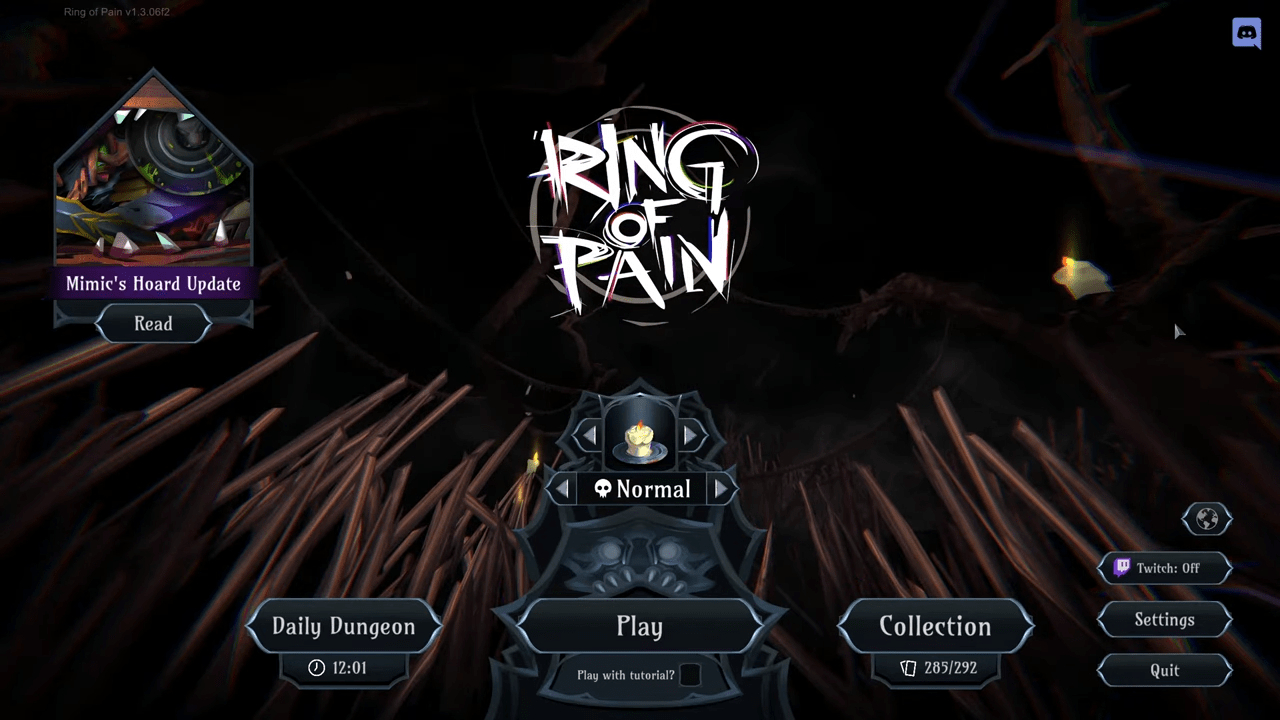
- Developer: Simon Boxer, Twice Different
- Publisher: Humble Games
- Release Date: October 15, 2020
- Platform: PC, Mac, Xbox, Nintendo Switch
- Genre: Roguelike deck-driven dungeon crawler
- Core Loop: Navigate card ring → collect souls & items → manage stats & curses → choose exit or delve deeper
2. Story & Setting
Seemingly trapped in a nightmare loop, you explore a dark, shifting realm manifested by fear and obsession. The “Ring” is said to mirror your inner turmoil, populated by grotesque creatures, cryptic statues, and shadowy whispers. There’s no explicit narrative text; instead, environmental lore emerges through poetic cards and rare “Gravestone” interactions that hint at the Ring’s origins and your role within its cycles.

3. Core Mechanics & Card Combat
At its heart, Ring of Pain is a turn-based combat puzzle. The ring presents two adjacent cards, and you choose one to interact with, i.e. be it an Enemy, Treasure, Potion, Stat-Increase, Path, or Hazard. Every interaction consumes a turn; creatures telegraph their next move via icons, letting you sequence actions, stealth, or scroll usage.

- Primary Stats: Health, Attack, Defense, Speed, Clarity (affects curse resistance, bonus souls, crit chance).
- Damage Types: Physical, Piercing, Ranged, Soul, Splash; each computed against target defense and resistances.
- Status Effects: Poison, Freeze, Petrify, Intimidate, Knockback, Ensnare; pendulum between benefit and curse risk.
- Stealth Chance: Percent chance to skip enemy cards when moving past; failures trigger full attack.
- Parry Chance: When defense exceeds attack, you may negate damage and stun the attacker.

4. Items & Equipment
After battles or in Treasure cards, you choose between two random items, reroll them at soul cost, or discard both. Items range across Rarity tiers, i.e. Common, Rare, Epic, Legendary, each boosting stats or granting passives like extra cards, path creation, or explosion effects.

- Item Sets: Brute (melee), Diviner (health & spells), Soul Kin (curse & souls), Stalker (speed & stealth), All (utility).
- Rarity Costs: 20, 40, 75, 160 souls for Mimics/Chests; rerolls cost 0/2/6/20 souls per tier.
- Cursed Stat Potions: Offer random boosts or inflict curse damage on failure, so use only in dire straits.
- Scrolls & Books: Instant free actions to clear or reconfigure cards without consuming a turn.

5. Paths, Shops & Encounters
Paths appear as card exits: black for core progression, colored for side rooms, and skull icons for elite encounters. Shops and “Finders Keepers” gifting events appear at fixed intervals, just before depths 4, 7, 10, and 13, offering potions or items for souls or free giveaways.

- Core Paths: Mandatory rooms numbered 1–16; colored side paths extend builds but risk deeper challenge.
- Shop Cards: Always contain 2 items plus a free potion; predominately better rarities at later depths.
- Finders Keepers: Owl’s gifts of random item sets appear twice per run; first before Depth 2, then before Depth 8.
- Event Dungeons: Special encounters (e.g., Gravestones) that may lock out shops until you resolve them.

6. Secrets & Unlockables
Beyond core items, Ring of Pain hides secret equipment and boss fights. GameFAQs documents unlock conditions for rare gear and hidden foes, such as the Rage Hound boss accessed by defeating a “companion room” with a Fur Coat equipped, thus rewarding the “Hello Friend” spellbook upon victory.
- Rage Hound Boss: Defeat the special fight after equipping Fur Coat to unlock the Hello Friend spellbook.
- Secret Cards: Some depths contain Gravestone cards that narrate lore or grant unique buffs, so observe card names closely.
- Multiclass Items: Post-launch update added 16 new achievements tied to class-specific gear obtained from Mimics.
- Daily Dungeons: Once unlocked, offer fresh modifiers and exclusive rewards for community challenges.

7. Advanced Strategies & Pro Tips
Seasoned Pain veterans share these refined tactics to extend runs and optimize build paths:
- Stealth Farming: Boost speed early and stealth past low-value enemies to preserve health for elite fights.
- Scroll Conservation: Use scrolls to clear hazard cards (like exploding enemies) safely, saving potions for true emergencies.
- Reroll Synergy: Reroll chest offers until you find items matching your current set, brute or stalker builds benefit most from set consistency.
- Path Selection: Enter skull exits only after securing solid defense and healing potions; their loot return far outweighs risk if managed properly.
- Quick Observe: Toggle Observe mode (Up on controller) to preview the next turn for all cards, letting you chain safe moves without surprises.

8. Conclusion
This article has mapped Ring of Pain’s circular dungeons, from card-based combat and path choice to item tiers, secrets, and expert techniques. So, armed with this knowledge, you’ll venture deeper, unlock hidden boss fights, and craft resilient builds that bend the ring to your will.

Begin your next run by prioritizing Speed and Clarity items in early chests, stealthing past easy rats, then entering skull paths at Depths 4 and 7 for powerful loot. Reroll aggressively until your set supports your build, and reserve scrolls for high-risk encounters to survive the Pain.

Leave a Reply