
Last Updated on 27 August, 2025
The journey from World of Warcraft’s auction house to today’s sophisticated virtual economies represents one of gaming’s most fascinating evolutions. What began as simple item trading mechanics has transformed into complex financial ecosystems that mirror and sometimes surpass real-world market dynamics in complexity and scale.
The Foundation Years: WoW’s Economic Blueprint
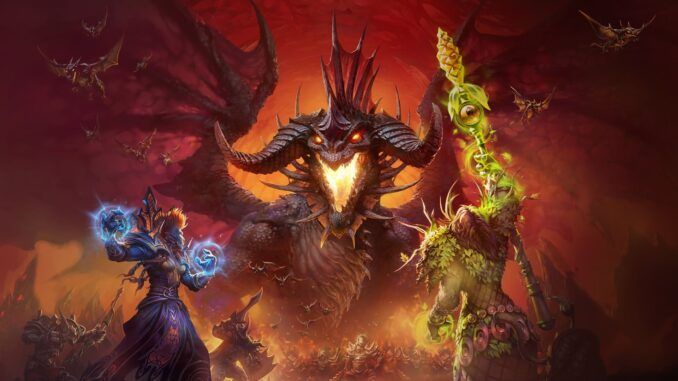
World of Warcraft established the template that modern MMORPGs still follow. The auction house introduced concepts of supply and demand, price discovery, and market manipulation to millions of players. Server-specific economies created natural experiments in economic theory, with different player populations developing unique pricing structures and trading patterns.
The introduction of cross-realm functionality fundamentally altered these dynamics, demonstrating how globalization affects local markets. Suddenly, isolated server economies merged into larger, more efficient markets with reduced price disparities but increased competition.
The OSRS Revolution: Simplicity Meets Sophistication
Old School RuneScape’s Grand Exchange represents a masterclass in economic design. Unlike WoW’s complex auction mechanics, OSRS opted for transparent, instant price matching that eliminated many traditional trading frictions. This system created unprecedented market efficiency while maintaining the game’s commitment to simplicity.
The OSRS gold economy demonstrates remarkable stability despite lacking central banking controls. Player-driven supply and demand naturally regulate inflation, while the game’s item sink mechanics prevent excessive accumulation. Professional trading services have emerged to support this ecosystem, with platforms like rpgstash.com providing secure transaction infrastructure that enables player confidence in high-value trades.
Modern Innovations: Beyond Traditional Models
Contemporary MMORPGs experiment with revolutionary economic concepts that push beyond established boundaries. Subscription token systems allow players to trade game time for in-game currency, creating direct links between virtual and real economies. These innovations challenge traditional monetization models while empowering players with new forms of value creation.
Blockchain integration represents the latest frontier, with play-to-earn mechanics enabling direct conversion of gaming achievements into tradeable assets. While still experimental, these systems suggest future virtual economies may operate more like traditional financial markets than gaming mechanics.
The Psychology of Virtual Wealth
What makes these economies particularly fascinating is how they reveal human economic behavior in controlled environments. Players exhibit the same biases, heuristics, and emotional responses that drive real-world markets. Fear and greed cycles, market bubbles, and crowd psychology all manifest in virtual spaces with remarkable consistency.
Research into virtual economies provides insights applicable to traditional finance, behavioral economics, and market design. The controlled nature of gaming environments allows researchers to study economic phenomena that would be impossible to isolate in real markets.
“Why Old School RuneScape Remains Relevant in 2025’s Gaming Landscape”
In an era dominated by battle royales, live services, and AAA spectacles, Old School RuneScape’s continued success seems anachronistic. Yet this 20-year-old game consistently ranks among the most-played MMORPGs, defying conventional wisdom about what modern gamers want. Understanding OSRS’s enduring appeal reveals important truths about gaming’s future direction.
Authentic Progression in an Instant Gratification World
While most modern games optimize for immediate satisfaction, OSRS embraces delayed gratification as a core design principle. Every level gained, every quest completed, and every OSRS gold piece earned represents genuine achievement that required substantial time investment. This authenticity creates emotional attachment that temporary progression systems cannot match.
The game’s skill system exemplifies this philosophy. Reaching 99 in any skill requires dozens or hundreds of hours of focused effort. Rather than feeling tedious, this commitment creates a sense of ownership and pride that resonates with players seeking meaningful accomplishment in their gaming experiences.
Community-Driven Evolution
OSRS’s democratic approach to development sets it apart from typical game update cycles. The polling system ensures changes reflect genuine community desire rather than developer assumptions about player preferences. This collaborative relationship has fostered unprecedented player loyalty and trust.
The economic implications extend beyond game mechanics. When players vote on content that might affect OSRS gold values or trading patterns, they’re participating in economic governance that few other games offer. Services like rpgstash.com benefit from this stability, as community-approved changes rarely create the market disruptions common in other games.
Nostalgic Innovation
OSRS masterfully balances nostalgia with innovation, maintaining its classic feel while introducing modern quality-of-life improvements. Mobile compatibility brought the full OSRS experience to smartphones without compromising the core gameplay, demonstrating how legacy titles can adapt to contemporary platforms.
The game’s visual style, once considered dated, now feels refreshingly timeless compared to the rapidly aging photorealistic graphics of AAA titles. This aesthetic longevity ensures OSRS won’t face the graphical obsolescence that affects most games.
Economic Lessons for Gaming’s Future
OSRS’s economic model offers insights relevant across the gaming industry. The game’s subscription-based revenue, combined with optional cosmetic purchases, creates sustainable income without compromising gameplay integrity. Players understand the value proposition and willingly pay for access to a consistently updated, community-focused experience.
The robust player-to-player economy, supported by secure trading infrastructure, demonstrates how games can facilitate meaningful economic interaction without relying on predatory monetization tactics. This approach builds long-term player relationships rather than extracting maximum short-term revenue.
Looking Forward
As gaming increasingly moves toward service-based models, OSRS’s approach offers a blueprint for sustainable success. The game proves that depth, community involvement, and respect for player investment can create lasting engagement that transcends technological trends.
In 2025’s saturated gaming market, OSRS’s continued growth suggests players crave authenticity, meaningful progression, and genuine community more than flashy graphics or trending mechanics. This lesson will likely influence game design for years to come.

Leave a Reply