
Last Updated on 4 May, 2026
Dive into the unforgiving yet breathtaking wilderness of 13th-century Mongolia as a brave Yam courier rider in The Legend of Khiimori. Many players step into this system-driven survival experience expecting a simple ride, only to find their precious mounts exhausted or injured due to complex hidden mechanics. This comprehensive guide solves that early-game frustration by demystifying the intricate horse color genetics and deep attribute training systems. By following our step-by-step strategies, you will easily learn to navigate the breeding tent, optimize your early resources, and engineer the ultimate equine companion.
Table of Contents
Securing Your First Steed
Every great journey begins with a single step, and in this game, that step involves finishing the introductory questline. Many players naturally feel the urge to dive straight into the deep genetic mechanics, but the game requires you to complete the tutorial first.
Once you wrap up the opening segments, a generous character named Yisu hands you enough currency to secure your very first mount. The local seller presents you with three distinct paths. You must choose between a strong companion, a fast companion, or a balanced companion. Furthermore, the merchant offers you three incredible breeds to select from: the sturdy Mongolian horse, the sleek Akhal Teke, or the powerful Ferghana.
These starter animals sport relatively basic visual patterns, serving as a reliable foundation to keep you moving until you unlock more advanced options. Choosing a strong path, such as the Ferghana model, grants you a massive advantage in hauling heavy delivery items. Opting for a fast animal increases your galloping efficiency, while a balanced animal ensures you maintain your footing on treacherous, steep slopes. You hold the power to dictate which playstyle suits you best. Do not stress over this initial decision, because you can easily trade this animal back to the merchant later in your playthrough. Right now, you simply need a set of hooves to carry you forward.
The Fundamentals of Multiplication
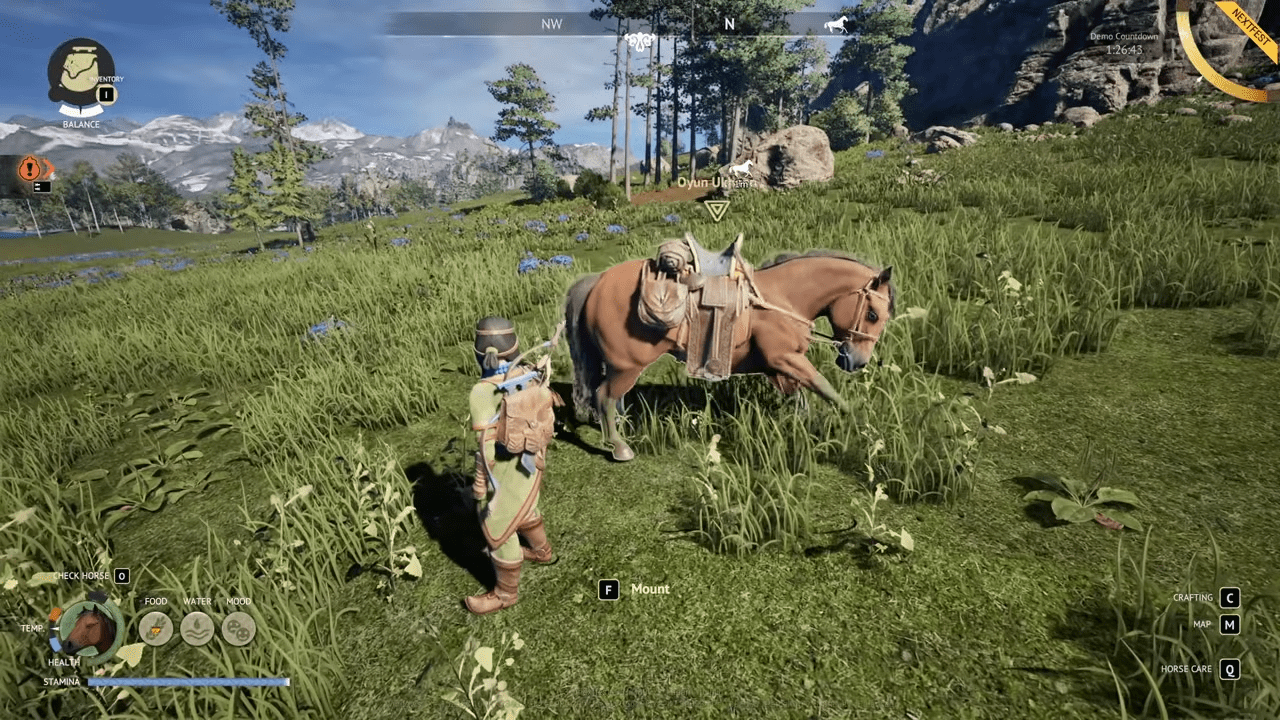
Once you establish your footing and build up a respectable coin reserve, you can unlock the true potential of your stable. To initiate the multiplication process, the game mandates that you own a minimum of three animals. You require one active mount to ride around the world, alongside one stallion and one mare to place inside the specialized tent.
You will locate the designated merchant and the reproduction facilities in Tov. I strongly advise accumulating at least 1000 coins before you begin experimenting. The most affordable animals cost approximately 200 coins each at courier rank zero. If the merchant presents an unappealing inventory, you can simply rest for a few in-game days to force his stock to refresh. As you complete missions and raise your courier rank, the merchant will gradually offer a larger and more expensive variety of breeds.
Combining your stallion and mare costs exactly 20 coins. During this active period, the mare waits inside the barn and becomes entirely unavailable for you to ride. A newborn foal arrives just a few in-game hours after you pay the fee. If you lack patience, you can walk to a nearby shack and sleep until sunrise to speed up the clock. You can interact with the new family by walking to the gate located to the left of the station. Interact with this gate to teleport inside the enclosure and pet your animals. The foal requires exactly two in-game days to mature into an adult, at which point you can equip it for your delivery missions.
Developing Equine Attributes
The creatures in The Legend of Khiimori feature five distinct attributes: Strength, Agility, Endurance, Balance, and Spirit. You can investigate these statistics by clicking directly on your companion’s profile. You must actively train each specific attribute using completely different methods to unlock your animal’s peak potential.
Building Power and Resilience
To enhance Strength, you must force your companion to work hard. Load up your inventory and carry heavy cargo during your travels. You must also actively navigate through punishing terrain, such as deep sand, thick snow, thick mud, and bodies of water. Finally, surviving an injury or a poison affliction bolsters their strength. However, you must heal an injured animal promptly to avoid unseen negative consequences.
To cultivate Endurance, you must push the limits of survival. Carefully ride your companion while its health bar remains dangerously low. You must also expose the animal to extreme environmental factors by enduring both freezing weather and sweltering hot weather.
Mastering Movement and Terrain
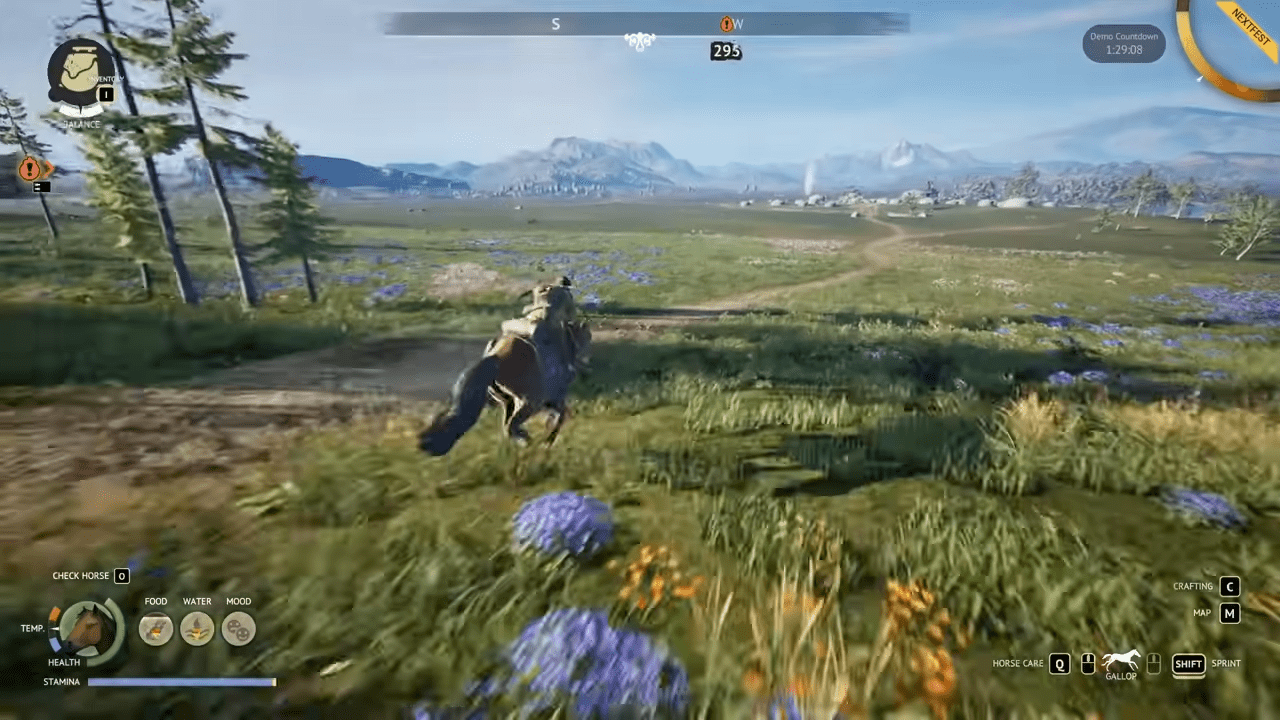
To improve Agility, you need to focus on speed and reflexes. Push your companion into a full gallop as often as possible. Challenge their footwork by riding over hard rock, slippery ice, or weaving quickly through dense forest trees. Executing a sudden power stop from a high speed also directly contributes to this attribute.
To perfect Balance, you must intentionally create unstable riding conditions. Force your companion to climb up steep slopes. Furthermore, you can manually arrange your cargo inventory in a chaotic manner to make the animal physically unbalanced, then ride it in that state. Finally, push forward by riding directly into a strong headwind.
Cultivating Courage and Willpower
To fortify Spirit, you need to demonstrate bravery. Actively command your mount to jump over physical obstacles scattered across the landscape. You must also endure terrifying conditions by maintaining control while running away from dangerous predators like bears and wolves. Riding while your companion suffers from low stamina also builds their spirit, though this action inflicts slight damage to them.
Quirks and Dispositions
Beyond raw physical attributes, every animal develops unique personality traits. These quirks directly dictate how the creature reacts to specific stimuli and environments. A positive reaction boosts their mood, while a negative reaction severely hinders your adventure.
| Trait | Effect |
|---|---|
| Abstinent | Requires less water |
| Amphibious | Gains mood while swimming |
| Brave | Gains mood while scared |
| Cactus | Requires less food |
| Chilly | Loses mood in freezing weather |
| Cold Lover | Gains mood in freezing weather |
| Coward | Loses mood when scared |
| Drinker | Requires more water |
| Galloper | Gains mood while galloping |
| Greedy | Requires more food |
| Gourmant | Gains mood while eating |
| Grass Lover | Gains mood while riding on grass |
| Hangry | Loses mood while low on food |
| Heat Lover | Gains mood while in hot weather |
| Hill Hater | Loses mood while riding up slopes |
| Hurdler | Gains mood when jumping |
| Hydrophobic | Loses mood while swimming |
| Lazy | Loses mood while galloping |
| Nocturnal | Gains mood at night |
| Pet | Gains extra mood for horse care |
| Playful | Gains mood near rabbits |
| Pack Horse | Gains mood while encumbered |
| Rain Lover | Gains mood in rain |
| Rain Hater | Loses mood in rain |
| Snow Hater | Loses mood in snow |
| Sun Lover | Gains mood while riding in sunny weather |
| Sweaty | Loses mood in hot weather |
| Wind Spooked | Loses mood while in strong wind |
| Wind Lover | Gains mood while in strong wind |

The Science of Pigmentation: Genetics and Alterations
The game utilizes an incredibly deep system based on real-world color genetics. You can only mix animals that lack a direct parental connection. You cannot combine siblings, nor can you mix a parent with its direct offspring. However, you can combine a grandparent with its grandchild! This specific strategy allows you to force rare coat markings to appear much more frequently.
A foal inherits its physical breed entirely from its parents. Mixing two Mongolians guarantees a Mongolian newborn. Mixing a Mongolian with a Ferghana gives the newborn a random chance to inherit either body type.
The game displays all genes using double letters. Two capital letters indicate a homozygous dominant trait. Two small letters indicate a homozygous recessive trait. A combination of one capital and one small letter indicates a heterozygous trait.
Establishing the Foundation
The Extension (E) gene dictates the absolute base pigment of the coat, choosing between black or red (chestnut).
- EE: Generates a solid black base.
- Ee: Generates a black base, but secretly carries the red gene.
- ee: Generates a red (chestnut) base.
The Agouti (A) gene exclusively targets black-based animals and dictates how far the black pigment spreads. It has absolutely zero effect on red-based animals.
- AA / Aa: Generates a Bay coat, restricting the black pigment strictly to the mane, tail, and legs.
- aa: Allows the black pigment to cover the entire body.
Lightening the Canvas
Dilution genes actively bleach the base color. To function, they require at least one capital letter present in the code.
- Dun (D): This primitive modifier lightens the coat and paints a dark dorsal stripe from the ears down to the tail. It sometimes adds leg stripes. A Dd combination provides minor dilution. A DD combination creates a heavy visual dilution and guarantees every offspring will carry at least one Dun gene.
- Champagne (Ch): This modifier affects both black and red bases, creating golden or tan canvas colors. A Chch combination leaves the skin dark. A ChCh combination turns the skin completely pink with freckles, turns the eyes hazel or amber, and guarantees the trait passes down.
- Cream (Cr): A Crcr combination provides a highly visible lightening effect on the body, mane, and tail. A CrCr combination aggressively bleaches the animal almost pure white, turning the skin pink and the eyes blue.
- Gray (G): This unique modifier alters the canvas over time. Foals drop with their original base colors and slowly turn gray as they mature. They retain their dark skin. A Gg combination produces Dark Grays and Dappled Grays. A GG combination produces Light Grays and guarantees transmission to the next generation.
Painting with Patches and Spots
- Tobiano (To): This pattern paints large white patches across the animal’s back. ToTo creates massive amounts of white coverage, while Toto creates much smaller, broken patches.
- Leopard (Lp): This pattern generates distinct spots. Surprisingly, LpLp creates an almost entirely white animal with very few spots, while Lplp covers the animal in heavy, concentrated spotting.
Harnessing the Power of Fruit
The Legend of Khiimori provides an artificial influence mechanic known as the blessing system. You manipulate this system using two specific items: cherries (found scattered around Yam Station) and cowberries (found deep within the forests). You must secure at least 26 of each fruit type to cover every possible combination. Keep these items in your personal backpack, not your saddlebags. Currently, the game simply checks your inventory without actually consuming the fruit, though developers may patch this later.
Open the breeding window and click the top right option to access the interface. A newborn inherits exactly one letter per gene from each parent. The game grays out the genes you have the power to alter and blacks out the genes you cannot change.
If you combine an EE parent with an ee parent, the newborn will absolutely be Ee, leaving you no room to intervene. If you combine an Ee with an Ee, the interface allows you to push the outcome toward EE, Ee, or ee. You guarantee your desired outcome based on the amount of fruit you hold:
- 60% Success Rate: Requires 1 cherry or cowberry.
- 80% Success Rate: Requires 2 cherries or cowberries.
- 100% Success Rate: Requires 3 cherries or cowberries.
You can also stack the genetic deck regarding face and leg markings. Mixing two parents that share the exact same facial marking drastically increases the odds of the newborn inheriting that specific pattern.
Masterclass: Crafting a Midnight Coat
Do you wish to engineer a flawless, solid black animal or a rare Grullo right at the start of your adventure with a courier rank of zero? Follow this exact blueprint to achieve perfection.
Assembling the Foundation Stock
Step 1: Create a new game and intentionally skip the tutorial missions. The game automatically awards you a male Mongolian bay tobiano named Oyun Ukhaan. We require him because his code contains EE (no chestnut) and he lacks the Dun gene. Rename him Alpha to keep your stable organized.
Step 2: Complete a few cargo missions until your wallet holds roughly 450 to 500 coins. Harvest exactly 24 cherries and 24 cowberries, placing them securely in your backpack.
Step 3: Travel to Tov and rest to rotate the merchant’s inventory. Purchase the Red Dun Limousin named Nuur. She carries the ee gene, ensuring black pigment everywhere. Rename her Beta.
Step 4: Rotate the merchant’s inventory again and purchase Khomool. He acts as the ultimate genetic wildcard, carrying heterozygous genes for almost everything except Dun (DD). Rename him Gamma.
Producing the Grullo Blueprint
Step 5: Combine Alpha and Beta. You cannot manipulate the outcome effectively yet, but you must aim for a FEMALE result. Mount your steed to create a manual save file right before you skip time in the tent.
Step 6: If the newborn drops as a male, reload your save file. Keep trying until you secure a Bay Dun Tobiano female. Rename her Delta.
Step 7: Combine Delta and Gamma. Open the intervention menu and lock in these exact parameters: EE/aa/Dd/chch/crcr/lplp/gg/toto. Aim specifically for a FEMALE. This precise sequence produces a solid Grullo (Blue Dun). Rename her Epsilon.
Refining the Final Generation
Step 8: Return to the merchant and rotate his stock until you locate a beautiful smoky black mare named Baigal. Rename her Zeta.
Step 9: Combine Zeta and Alpha. Apply the fruit to target this sequence: EE/Aa/dd/chch/crcr/lplp/gg/Toto. You must aim for a MALE this time. This crucial step successfully deletes the Cream gene and removes the homozygous dominant tobiano trait. Rename this resulting bay tobiano male Eta.
Step 10: Execute the final combination by mixing Epsilon and Eta. Apply the fruit to guarantee this exact sequence: EE/aa/dd/chch/crcr/lplp/gg/toto. By following this path and applying maximum influence, you will successfully produce a guaranteed solid black steed!
If you desire an animal with completely clean legs lacking white markings, you might need a few additional attempts. Since Baigal (Zeta) lacks leg markings, you can try cultivating an intermediate foal from her that also lacks markings to increase your final odds.
Conclusion
Surviving the harsh climates and steep cliffs of the Mongolian landscape requires far more than just basic riding skills. By applying the techniques offered in this guide, you can successfully eliminate the guesswork of the blessing system and confidently breed visually stunning mounts. You now possess the exact solutions needed to overcome the steep early learning curve and transform your starter stable into a legendary bloodline. Saddle up your perfectly trained companion, load up your heavy cargo, and conquer the untamed steppes with absolute confidence.

Leave a Reply